How to Treat Painful Bee Sting Safely?
September 10, 2025
Introducing The Busy Bee to Singapore Modern Living
September 11, 2025
In a beehive of 50,000 workers, every bee is female — and every bee began life in an identical egg. What separates the queen from her sisters is not genetics, but a single dietary switch: royal jelly fed exclusively and continuously throughout larval development. This nutritional trigger activates entirely different gene expression patterns, switching off the biological clock that limits worker lifespan and enabling the queen to reproduce, lead and survive for years while those around her live just weeks. The science behind this is reshaping what we understand about ageing itself.
- ✓A queen bee and a worker bee are genetically identical at birth. The queen's extraordinary 5-year lifespan is triggered purely by continuous royal jelly feeding during the larval stage — not by her DNA.
- ✓A queen at peak production lays up to 2,000 eggs per day — meaning a new colony can double in population within weeks if left undisturbed in a structural cavity.
- ✓When a queen dies without a successor, the colony enters crisis — workers begin laying unfertilised eggs that produce only drones, and the hive collapses within weeks.
- ✓For Singapore homeowners, understanding queen bee biology explains why a small bee presence in your wall can rapidly escalate into a 50,000-strong colony requiring professional removal.
The Queen's Extraordinary Lifespan Explained
Across the animal kingdom, larger body size typically correlates with longer lifespan. The queen bee violates this rule spectacularly: she is only slightly larger than a worker yet outlives her by a factor of 40. Understanding why requires looking at what happens in the larval cell.
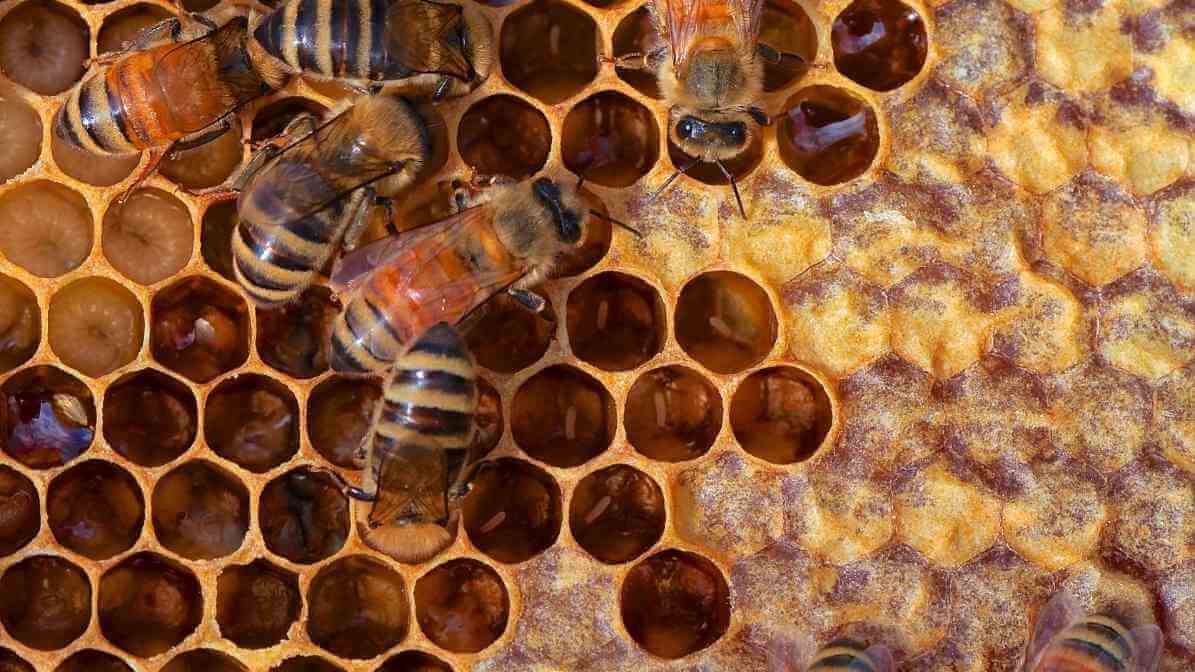
The queen (larger abdomen, attended by workers) is the colony's sole reproductive female. Her longevity — up to 5 years — is determined entirely by diet, not genetics.
Worker bees receive royal jelly for only the first three days of larval life before being switched to a mixture of pollen and honey called "bee bread." This dietary switch activates a completely different developmental pathway — one that produces smaller ovaries, a shorter lifespan and the full range of behaviours needed for foraging, comb-building and colony defence. The queen candidate continues on royal jelly throughout her entire larval development, activating the genes that produce her oversized ovaries, her larger body and her dramatically extended lifespan.
Royal Jelly & the Epigenetics of Queen Bee Longevity
Royal jelly is a protein-rich secretion produced by the hypopharyngeal and mandibular glands of nurse bees. It is chemically complex, containing water, proteins, sugars, fats, vitamins and bioactive compounds including a fatty acid called 10-hydroxy-2-decenoic acid (10-HDA) — found nowhere else in nature.
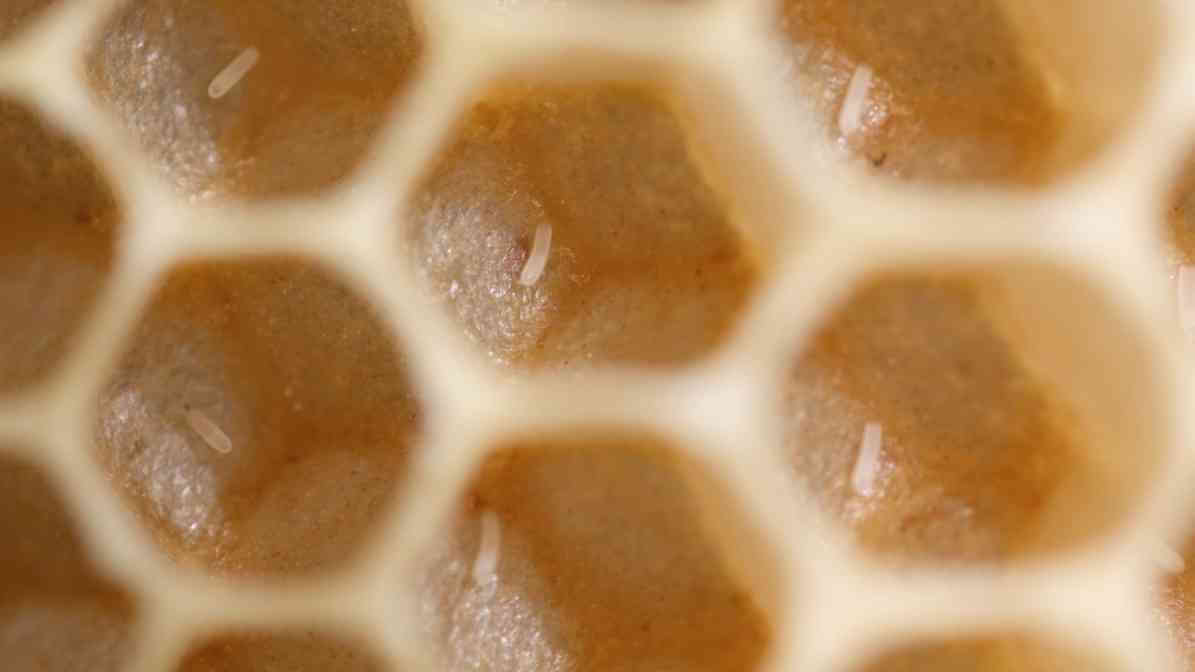
How a Queen Bee Is Born & Selected
Queen production is one of the most sophisticated processes in the insect world. The colony does not simply feed a larva royal jelly — it constructs special queen cells, manages competing queen candidates and eliminates rivals with surgical precision.
When the existing queen dies suddenly, worker bees select several young larvae (under 3 days old) and begin feeding them royal jelly exclusively. They build enlarged queen cells around these larvae — peanut-shaped wax structures hanging vertically on the comb face.
The first virgin queen to emerge immediately seeks out rival queen cells and stings the still-capped queens inside, killing them. If two queens emerge simultaneously, they fight until one is dead. The survivor becomes the colony's sole queen.
The virgin queen embarks on one or more mating flights, mating with 10–20 drones in the air. She stores all collected sperm in a specialised organ (the spermatheca) and uses it to fertilise eggs for the rest of her life — never mating again.
The Queen's Power Over the Colony
The queen's influence extends far beyond egg-laying. She is the colony's chemical command centre — continuously producing pheromones that regulate every aspect of hive behaviour.
QMP suppresses worker reproduction, triggers foraging behaviour, stabilises the colony's social structure and signals the queen's health status. The absence of QMP — when a queen dies or is removed — triggers immediate emergency queen-rearing behaviour.
At peak productivity a queen lays up to 2,000 eggs per day — more than her own body weight. She has complete autonomic control over whether to fertilise each egg (producing female workers or future queens) or leave it unfertilised (producing male drones).
As a colony becomes overcrowded or the queen ages, workers prepare swarm cells. The old queen departs with half the colony to find a new home — the swarm. This natural reproduction mechanism is how bee infestations spread from building to building.
Workers constantly assess queen pheromone levels. A queen whose pheromone output declines (through age or illness) triggers workers to begin raising replacement candidates — even while the current queen is still alive.
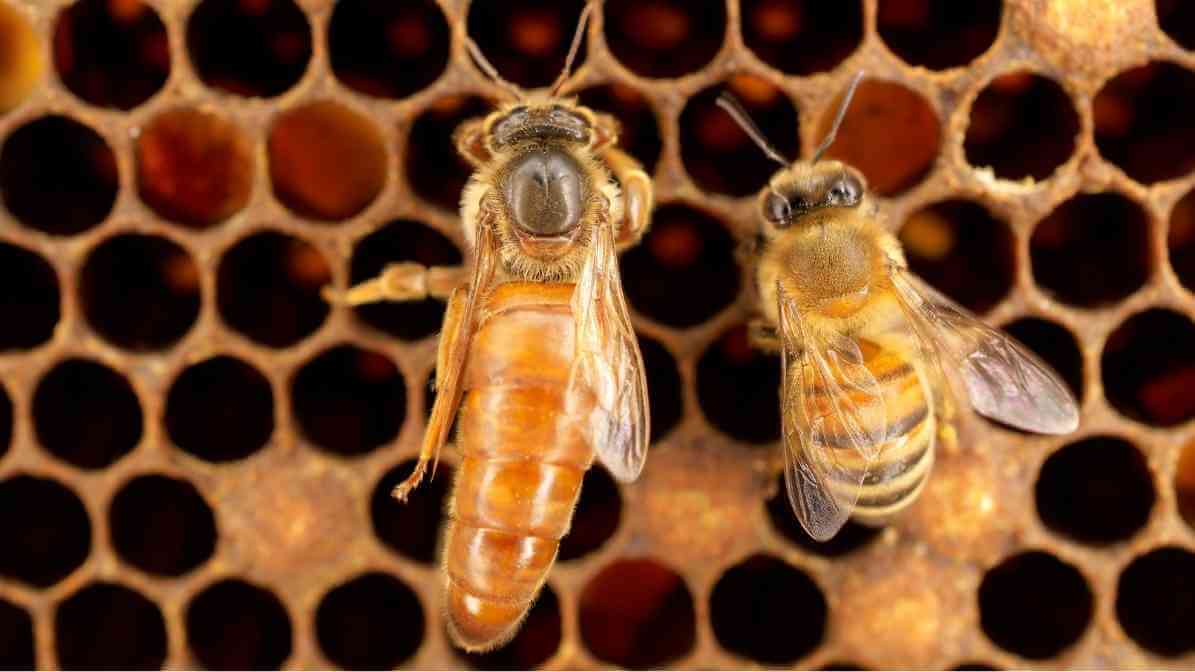
A queen laying 2,000 eggs a day can double a colony's population in weeks. Early removal is always safer and less costly. NEA licensed. 7 days a week.
Colony Collapse: What Happens Without a Queen
Remove the queen and the colony begins to unravel with surprising speed. Understanding this process explains why professional bee treatment targets the entire colony — not just the visible bees at the entrance.
Workers detect the absence of queen pheromone and begin emergency queen-rearing. They select young larvae and expand their cells into queen cups.
If no suitable young larvae are available, workers begin laying unfertilised eggs. These produce only drones, which cannot maintain the colony — a condition called a "laying worker" colony.
Without new workers hatching, the ageing worker population dies off faster than it is replaced. Honey stores are depleted, brood dies and the colony collapses entirely within 6–10 weeks.
Important: A collapsing colony with no queen is often more aggressive than a healthy one — stressed, disorganised bees sting at lower provocation thresholds. Do not attempt to hasten colony collapse through DIY methods.
What Queen Bee Biology Means for Property Owners
Understanding the queen's role has direct practical implications for anyone dealing with a bee infestation in Singapore.
A newly established swarm of 5,000 bees with a laying queen can become a 30,000–50,000-strong colony within a single season. The larger the colony, the more complex and costly the removal, and the greater the structural damage from comb expansion.
Spraying visible bees without reaching the queen simply removes workers while she continues laying. The colony replenishes itself within days. Effective treatment must reach and eliminate the queen and all brood — not just surface-visible individuals.
Queen pheromone residue absorbed into wax comb acts as a long-term beacon for new swarms. Professional removal includes comb extraction (where structurally accessible) and entry point sealing to eliminate this recruitment signal.
Frequently Asked Questions
A Queen Bee Grows Fast.
Don't Wait to Call Us.
Once a queen is established in your wall or ceiling, her colony can reach 50,000 bees within months. The sooner you act, the simpler and safer the removal. Our NEA-licensed specialists provide professional bee treatment 7 days a week across Singapore.