Behaviour, Biology
& Habitat
Here in Singapore, there are over 13,800 species of ants out of an estimated total of 22,000 worldwide. These social insects are often associate with bees and wasps, but not all are able to fly. Their main goal is to find a mate and establish a new large colony. At times, ants in the house are mistaken with drywood termites and vice versa.
With around 409 ant species in Singapore, it is not surprising that they have become a source of frustration and concern. Unfortunately, not many are not aware of the threat and risk they are capable to inflict. However, there are various effective ways to address infestations problem.
To prevent them from invading your home, it is important to minimise moisture and standing water in the vicinity. Repair any leaks in pipes, taps, drains, and air conditioner water flow systems. Additionally, keep tree branches and potted plants away from your house as they often use them to gain entry.
A few type of treatment methods available to tackle Singapore ant infestation problem. Getting a professional pest control services is your best bet to rid of your ants problem permanently.
Ant Characteristics
They are social insects that lives in nest colony spread throughout the entire world. The nesting sites can be underground, in mounds, in wood structures, or in your homes.
They go through 4 different stages from the eggs to larva, pupae and finally an adult. The larvae are off white in colour and legless, similar to little maggots. They will also undergo repeated moulting as it grows. Eventually, a cocoon will cover the pupae during its metamorphose period to an adult.
The complete process may take from 6 weeks to 2 months and they can live for about 90 days. However, this depends on the species, because some can go for as long as 6 months to a year. The queen can control the sex of her offspring by choosing to fertilise the eggs with sperm.
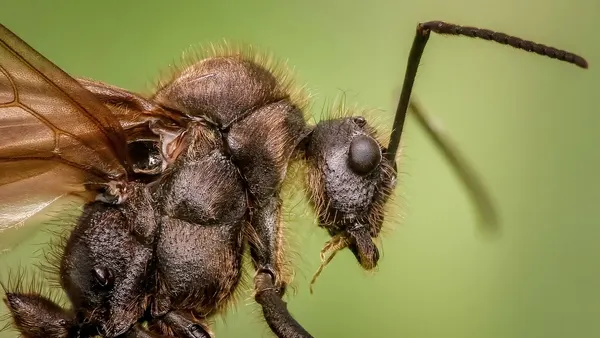
All the fertilised eggs and pupae are well-nurtured to become the next queen. Worker ants are mostly female and larvae depend entirely on them for care. Winged ants, known as the reproductive, they are capable of flying. Winged male are produced only at certain times of the season from unfertilised eggs, and their sole purpose is to mate. With most species, the males ants are much smaller than the queens but still possess four wings. Males die shortly after mating, usually within a couple of weeks. The workers also feed the larvae with regurgitated food.
These creatures are easily recognisable with their narrow waists, bulbous abdomens, and elbowed antennae. They are commonly mistaken for termites, but to differentiate, they have three distinct body segments. The head, thorax, and abdomen and come in various colours such as black, brown, tan, or reddish brown.
Most type of ants in Singapore lives underground, in dead wood, or plant cavities. Commonly found in apartments, particularly infesting kitchens and bathrooms. The kitchen is their prime target as it provides the main food source. They establish sub nests in cracks, crevices, and wall voids, often resulting in multiple sub nests in the kitchen.
They have a remarkably diverse diet, consuming a wide range of food. While some opt for protein-based meals, others prefer carbohydrates. Additionally, most sugar ants have special affinity for sweet food, with honeydew being a central component of their diet. Honeydew is a delightful and sticky secretion produced by aphids.
Ants Colony
Signs of Ant Infestation
Ants can find their way into your home through various entry points, both from outdoors or brought in. At first, they may appear harmless, crawling around, gathering around crumbs and pet foods without causing much concern. It does not take long for them to multiply and become a widespread problem. Often catching people attention only when confronted with an infestation.
Leaving food unattended on the table for just five minutes, and you'll witness ants carry it eagerly feeding on it. When this happens, it becomes evident that you are facing a serious pest issue. However, the kitchen is their preferred nesting ground because of the abundance of food sources. Seeing them frequently in rooms is a clear indication that the nesting indoor colony is expanding.
To prevent them from establishing additional sub-nests, an ant bait is the best strategy. And further accommodating the infestation within your property, it is necessary to seek pest control professional services.
Watch out for these signs:
Ants Trail
They lay down pheromone trails that attract other ants to follow them to forage for food and back to their nest. You can see a large number of them working tirelessly to bring the food back to the nest. Diatomaceous earth and essential oil helps to disrupt the pheromone trail. It deter ants from wanting to enter your homes and control the population by drying and killing ants.
Live Presence
Not only in the United States North America, flying ants in Singapore do happens. When queens ants from mature colony are on a mission to establish new colonies. During migration, you can find wings and you need to inspect them to exclude the possibility of flying termites. You will notice a significant increase of activity roaming around and becomes impossible to leave any food unattended.
Nest
You can find them indoors, as they lurk in cracks and crevices within walls. Outdoors, they tend to make nests, ants build in small piles of soil or damaged wood, such as the nests of red imported fire ants.
Bite
Not all bite but when they do, they can cause allergic reactions. The fire ants painful sting is one of the most common bites that you can encounter being attack in groups. Argentine and red ants are one of the world's most problematic species as they are aggressive and territorial.
Types of Ants


Frequently Asked Questions
What types of ants are commonly found in Singapore homes? ⌄
The most common ant species found in Singapore homes are Ghost Ants (Tapinoma melanocephalum), Pharaoh Ants (Monomorium pharaonis), Crazy Ants (Paratrechina longicornis), Carpenter Ants (Camponotus spp.) and Weaver Ants (Oecophylla smaragdina).
Ghost Ants and Pharaoh Ants are the most frequently encountered indoors, particularly in kitchens and bathrooms, as they are attracted to food and moisture. Correct species identification is essential before any treatment, as different species respond differently to baiting and chemical methods.
Why are ants suddenly appearing in my home? ⌄
Ants enter homes primarily in search of food, water and shelter. They are attracted to crumbs, exposed food, spills, and food residue left on surfaces. They also enter during periods of heavy rain when outdoor nests become flooded, forcing colonies to seek dry ground indoors.
Once a scout ant locates a food source, it lays a pheromone trail back to the nest, directing hundreds of workers to follow the same path. This is why a small problem can escalate rapidly into a large infestation within days.
Are ants dangerous to my health or property? ⌄
Most ant species in Singapore are more a nuisance than a direct health threat, but they are capable of contaminating food and surfaces they crawl across. Pharaoh Ants are particularly concerning in healthcare settings as they can carry and transmit pathogens.
Carpenter Ants pose a structural risk as they excavate wood to build nests, weakening timber over time. Fire Ants and certain other species will bite or sting when disturbed, causing pain, swelling and in rare cases allergic reactions that require medical attention.
Can I eliminate ants on my own using store-bought products? ⌄
Over-the-counter sprays can kill ants on contact but rarely solve the root problem. Spraying workers without treating the nest causes the colony to split, a process called budding, which can spread the infestation to multiple new locations throughout your home.
Pharaoh Ants in particular are notorious for budding when disturbed by incorrect treatments. Professional ant control targets the colony directly, using species-appropriate baiting and residual treatments to achieve lasting results.
How does Innovative Pest Management's ant treatment work? ⌄
Our NEA-licensed technicians begin with a thorough inspection to identify the species and locate the nest. Treatment is then selected based on the species and severity of the infestation. This typically includes gel baiting, residual liquid spraying along runways and entry points, and targeted nest treatment where accessible.
For stubborn or recurring infestations, we schedule a follow-up visit to assess results and apply any additional treatment needed. All products used are approved by the NEA and applied safely in accordance with label guidelines.
Is the treatment safe for my family and pets? ⌄
Yes. All products used by Innovative Pest Management are NEA-approved and applied by licensed technicians trained in safe application methods. We advise residents and pets to vacate the treated areas during application and for a short period afterwards as specified by the product label.
Gel baits, which are one of our primary ant control tools, are applied in small targeted amounts in concealed locations, significantly reducing any exposure risk to people and pets.
How long does ant treatment take and how long will results last? ⌄
A standard ant treatment visit takes approximately 30 to 60 minutes depending on the size of the property and severity of the infestation. Gel baiting takes effect over several days as workers carry the bait back to the colony and feed it to the queen and larvae.
Results from a professional treatment typically last several months. Duration depends on the species, level of sanitation maintained, and whether structural entry points are sealed. We recommend a follow-up inspection 2 to 4 weeks after the initial treatment.
How can I prevent ants from returning after treatment? ⌄
Store all food in airtight containers and clean up spills and crumbs immediately. Do not leave pet food out overnight and empty bins regularly. Wipe down kitchen surfaces, especially behind appliances where food residue accumulates.
Seal gaps around pipes, door frames, window frames and cables where ants enter. Trim vegetation and tree branches that touch the exterior walls of your property, as these act as highways for outdoor colonies to access the building.
Get Professional Ants Control
NEA-Licensed & Guaranteed
Our NEA-licensed technicians will identify the exact species, locate the nest and eliminate the entire colony, with a scheduled follow-up to ensure lasting results.