Home Pest Control Termite Control Signs of Termite Infestation
Termite Identification Guide

Signs of Termite
Infestation — 7 Warning
Signs to Act On

Termites cause S$400 million in structural damage annually in Singapore, almost entirely out of sight. Learn the 7 specific signs that confirm termite activity so you can call a licensed inspector before the damage becomes structural.
Visual ID Guide HDB and Landed Sub-terranean and Drywood
S$400M
Annual Damage, Singapore
300g
Wood / Day, Per Colony
7
Warning Signs Identified
Free
Inspection, Same Day
Know What You're Facing

Two Types of Termite in Singapore

The signs you look for depend entirely on the species. Subterranean and drywood termites produce completely different evidence of infestation.

Subterranean Termites

Coptotermes gestroi, responsible for 90%+ of damage
Nest in soil, travel through mud tubes to reach timber feeding sites. Millions per colony; work invisibly inside walls and structural timber. Signs tend to be structural and appear only after significant damage.
Mud tubes on walls, skirting boards and foundations
Hollow-sounding timber when tapped
Blistering or bubbling paint with no moisture source
Clicking or tapping sounds from walls during night

Drywood Termites

Cryptotermes spp., common in furniture and fittings
Nest inside the timber they consume, requiring no soil contact. Arrive in properties via imported furniture. Smaller colonies but harder to detect. Signs are often misidentified as sawdust or wood dust.
Hexagonal frass pellets in small piles on surfaces
Small kick-out holes in timber surfaces (1 to 2mm)
Hollow-sounding furniture or window frames
Discarded wings near light fittings after swarming
Warning Signs

7 Signs of Termite Infestation to Check Now
Each sign below includes where to look, which species typically causes it, and what action to take when you find it.
01

Mud Shelter Tubes

Subterranean termites only
High, active infestation confirmed
Mud Shelter Tubes
Where to Look
Foundation walls, skirting boards, wall-floor junctions, basement columns, plumbing pipes, garden retaining walls
What You Will See
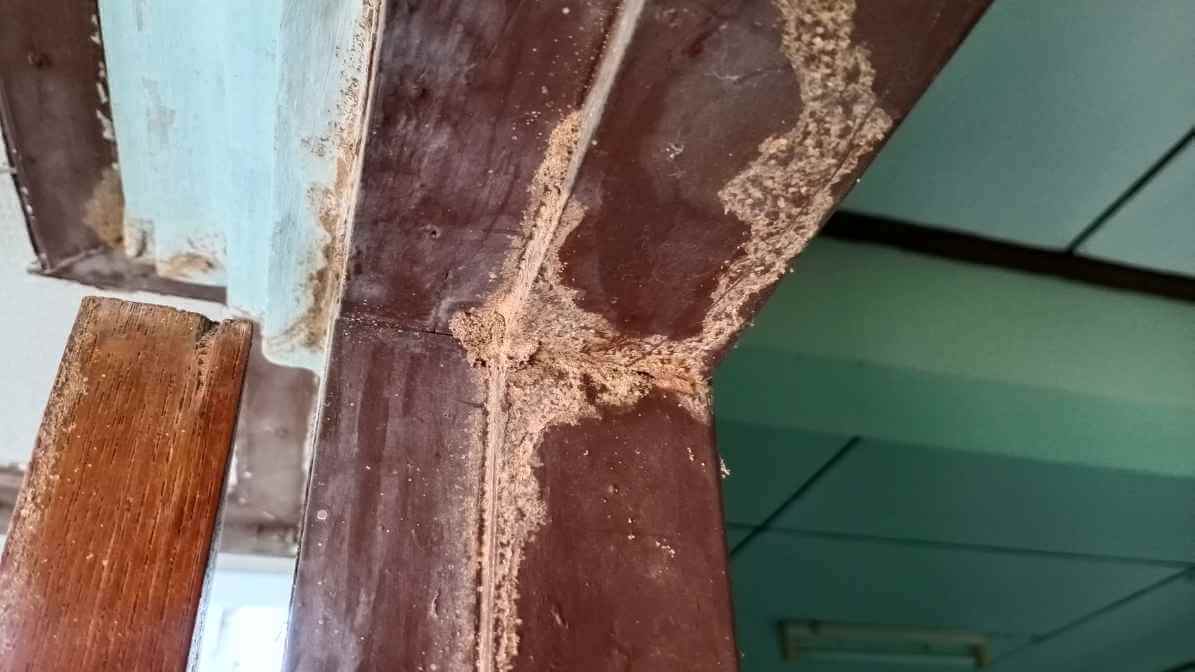
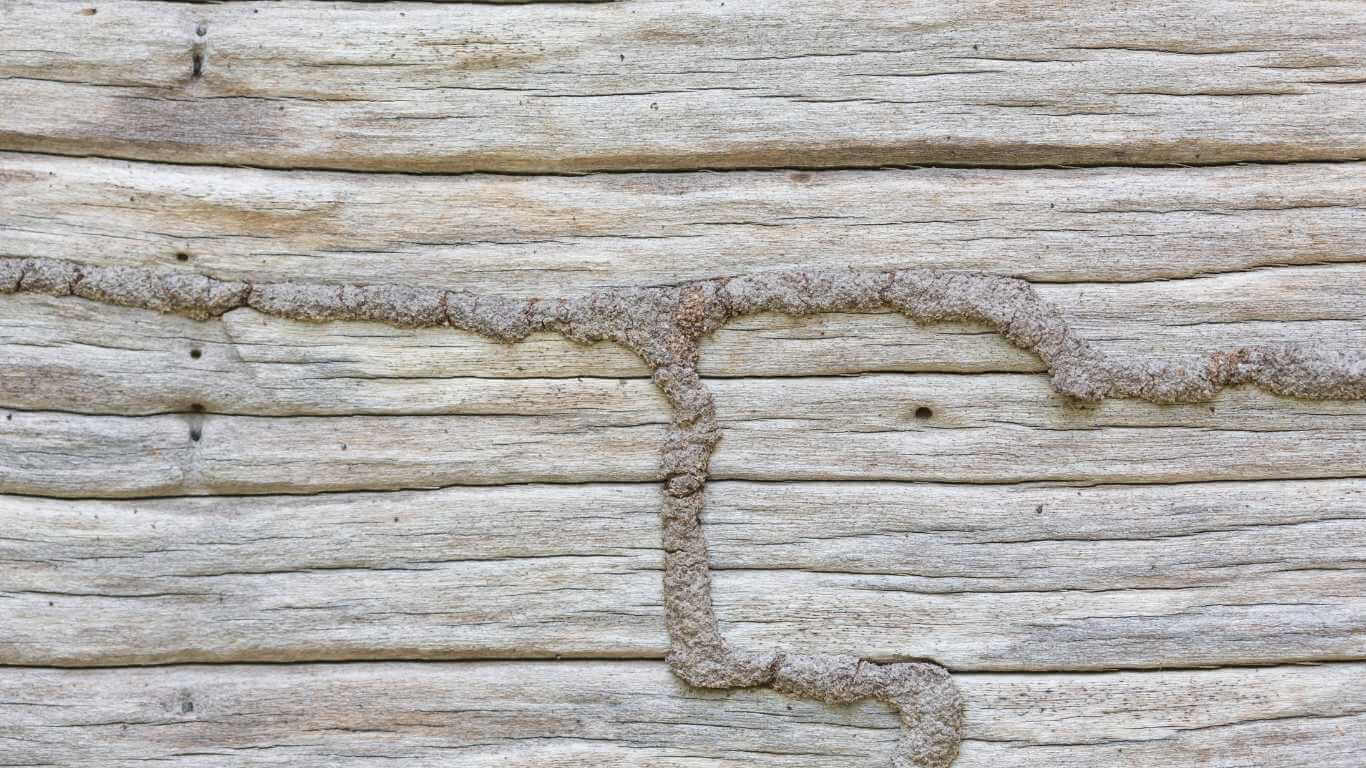
Pencil-width tunnels of compacted soil, wood particles and termite secretions. Brown-grey in colour. Surface may look damp or freshly built. Active tubes contain live workers inside.
What to Do
Do not break open or spray. This is a confirmed sign of an active subterranean colony. Contact a licensed pest control company for inspection immediately.
Pro Tip
Break one tube and check again in 48 hours. If repaired, the colony is actively using it.
02

Hollow-Sounding or Soft Timber

Both subterranean and drywood termites
High, structural damage already present
Hollow-Sounding Timber
Where to Look
Timber door frames, skirting boards, floorboards, staircase risers, architraves, wall panels, furniture
What You Will See
Tap firmly with a screwdriver handle. Solid timber produces a sharp knock. Termite-damaged timber produces a dull hollow thud. In severe cases the surface yields under light finger pressure.
What to Do
Do not break open the surface. Mark the location and call for professional inspection. Probe gently with a screwdriver at the edge. If it sinks easily, structural damage is advanced.
Pro Tip
Check door and window frames at all four corners. These are the first areas affected when termites travel upward from skirting boards.
03

Discarded Wings

Both, wing shape differs by species
Moderate to High, mature colony nearby
Discarded Wings
Where to Look
Window sills, light fittings, door thresholds, floor drains, spider webs near light sources
What You Will See
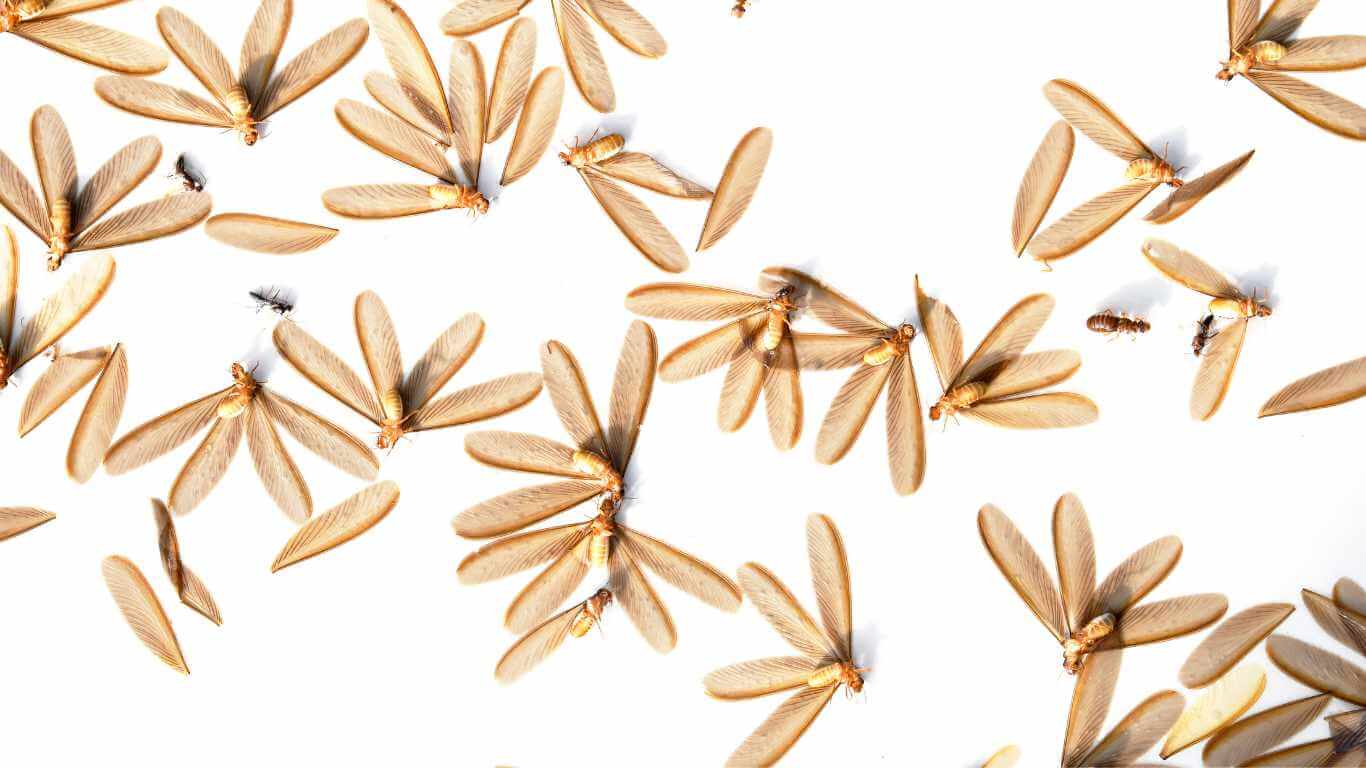
After swarming, alates shed both wings on landing. Subterranean termite wings are equal in length and translucent. Piles of discarded wings, especially after evening rainfall, indicate a mature colony nearby.
What to Do
Collect a sample in a sealed bag for species identification. Do not assume it is a one-time event. Swarming only occurs from colonies established for at least 3 to 5 years.
Pro Tip
Subterranean termite swarms typically occur in late afternoon to early evening following heavy rainfall. Check around light sources and window sills during this period.
04

Live Swarmers Inside the Property

Both subterranean and drywood termites
High, colony is mature and reproductive
Live Swarmers
Where to Look
Near light sources, window glass, light fittings, bathroom drains
What You Will See
Winged termites are small, dark-bodied with two pairs of equal-length wings. Distinguish from flying ants: termites have straight waists and straight beaded antennae. Flying ants have pinched waists and elbowed antennae.
What to Do
Do not spray aerosol insecticide directly at swarmers. This does nothing to the parent colony. Capture a specimen in a container and contact us for identification and inspection.
Pro Tip
If swarmers appear from inside timber, plaster or flooring, not from windows, the colony may be nesting inside the structure itself. This requires immediate inspection.
05

Termite Droppings (Frass)

Drywood termites primarily
Moderate, active feeding confirmed
Termite Droppings Frass
Where to Look
Window sills, furniture surfaces, floor below timber joints, inside wardrobes and cabinets
What You Will See
Drywood termites push dry, hard, oval-shaped pellets with six concave sides out of kick-out holes in timber. Colour varies from pale yellow to dark brown. Subterranean termites do not produce visible dry frass.
What to Do
Finding dry frass confirms drywood termites. Do not wipe it away before calling. The location helps technicians identify the active feeding site above.
Pro Tip
Check above where frass appears. Look for small round kick-out holes (1 to 2mm) in the timber surface. These are the ejection points.
06

Paint Blistering or Buckling

Subterranean termites primarily
Moderate, feeding near surface
Paint Blistering
Where to Look
Painted timber surfaces, plywood wall panels, skirting boards, door frames
What You Will See
Mud tube moisture causes paint or veneer to blister, bubble or buckle from behind. This can resemble water damage. If the surface sounds hollow when tapped and no plumbing leak can be identified, termite activity should be investigated.
What to Do
Do not scrape or break the blistered surface. Mark the location and have it inspected. Opening the gallery before treatment can disrupt the colony.
Pro Tip
If blistering appears on a wall with no pipe behind it and no water source above, termites are a more likely cause than moisture damage.
07

Clicking or Rustling Sounds

Subterranean termites, soldiers
High, active colony inside the structure
Where to Look
Inside wall cavities, skirting boards, flooring, door frames, audible in a quiet room
What You Will See
Soldiers rap their heads against tunnel walls to alarm the colony when vibration is detected. The sound is a faint, audible clicking or rustling. Best heard by pressing your ear against the suspected surface at night.
What to Do
Do not knock or tap repeatedly. Repeated vibration causes the colony to abscond and relocate, making treatment significantly harder. Call for same-day inspection.
Pro Tip
Workers also produce a soft chewing sound during active feeding. This is quieter than soldier clicking and requires close listening in complete silence.
Quick Identification

Termite Signs: Quick Reference

What You See Species Indicated Urgency What to Do
Mud tubes on wallsSubterraneanHighDo not break. Call for same-day inspection.
Hollow-sounding timberEitherHighSchedule professional thermal inspection.
Blistering paintSubterraneanMediumRule out plumbing leak first. Then inspect.
Discarded swarmer wingsEitherHighIndicates mature colony. Arrange inspection.
Hexagonal frass pelletsDrywood onlyHighDo not sweep. Location helps identify feeding site.
Clicking sounds in wallsSubterraneanHighActive infestation confirmed. Do not knock again.
Stiff doors and windowsEitherMediumInspect surrounding frame and timber elements.
Most Diagnostic Sign

Understanding Termite Mud Tubes

Mud tubes, also called shelter tubes, are the most diagnostic and conclusive sign of subterranean termite activity. They are built by worker termites from soil particles, wood fibres and termite secretions to protect foraging workers from air exposure and predators as they travel between the nest and their food source.
Finding a mud tube confirms an active subterranean colony nearby. Do not break or remove the tube before calling for inspection. Intact tubes help technicians trace the route back to the nest and determine colony size.
Critical: Do not spray the tube with insecticide. Contact killers only kill visible workers. The queen and colony deep in the soil are unaffected and the colony will simply re-route its tubes.
Termite mud shelter tube on wall
01
Working Tubes
The main highway tube, wide, straight and heavily used. Follows the shortest path from soil to food source. Most likely to be found on internal wall surfaces or inside wall cavities.
02
Exploratory Tubes
Thin, branching tubes extending in multiple directions from the main working tube. Used to locate new food sources. A network of these indicates an actively expanding colony.
03
Drop Tubes
Tubes hanging downward from wood to soil, built when termites need to return to soil from feeding sites above ground level. Common inside wall voids and under floors.
04
Swarm Tubes
Wide, porous tubes constructed specifically for alate (swarmer) exit during the swarming season. Finding swarm tubes indicates an extremely mature colony, likely 3 to 5+ years old.
Drywood Termite Identification

What Do Termite Droppings (Frass) Look Like?

Drywood termites push their waste out of their galleries through small kick-out holes in timber. Finding frass is one of the clearest indicators of a drywood termite infestation and allows you to identify the exact feeding location above, critical for targeted treatment.

How to Identify Drywood Termite Frass

Drywood termite frass pellets close-up
Drywood frass pellets are small (approximately 1mm), dry and hard, with six concave sides that give them a hexagonally faceted appearance. Colour ranges from cream or pale yellow in newly deposited pellets to reddish-brown or dark brown as they age, depending on the timber being consumed. They are found in small piles directly below the kick-out holes.
Size
Approximately 1mm, smaller than a pinhead
Shape
Oval with six concave longitudinal sides
Colour
Cream, tan, reddish-brown or dark brown
Texture
Dry and hard, not powdery or paste-like
Location
In piles below kick-out holes in timber surfaces
Smell
No distinct smell, unlike damp or mouldy wood
Finding frass: Look directly above the pile for small round holes (1 to 2mm) in the timber surface. Do not wipe frass away before calling. Its location tells our technician exactly where to probe.

Frass vs Common Look-Alikes

Material
Appearance
Texture
What it means
Drywood frass
Oval pellets, 6-sided
Dry and gritty
Active drywood colony
Sawdust
Irregular chips, flakes
Coarse, variable
Woodworking, no pest concern
Wood dust
Fine powder
Soft and silky
Timber ageing or beetle boring
Subterranean waste
Not visible externally
Moist paste in galleries
Requires professional inspection
Ant frass
Wood fragments and insect parts
Mixed, irregular
Carpenter ant activity
Subterranean termites do not produce visible dry frass. If you find dry pellets, the infestation is drywood. If you find mud tubes but no pellets, the infestation is subterranean. Both require professional treatment but use entirely different methods.
Location-Specific Guidance

Signs of Termites in HDB Flats vs Landed Properties

Termite activity looks different in HDB and condo units compared to landed homes, primarily because subterranean species need ground contact and travel routes differ by building type.
HDB Flats and Condominiums
Both drywood and subterranean, pattern varies by floor
Signs to Watch For
Drywood frass inside wardrobes, on sills below cabinet hinges or under furniture. Drywood termites arrive via imported timber furniture.
Mud tubes along utility risers, plumbing chases and concealed pipe runs. Subterranean termites travel vertically through building service ducts.
Hollow-sounding parquet flooring or plywood partitions, especially in kitchens and bathrooms where humidity is higher.
Discarded swarmer wings at window ledges or near light fittings during swarming season (March to September).
Paint blistering on internal walls. If no plumbing leak is found, termite activity behind the surface should be investigated.
Where to Inspect First
Wet kitchen and bathroom timber frames
Built-in wardrobes and cabinetry
Hollow partition walls in older HDB units
Window ledges and light fittings after swarming season
Utility cupboard and service duct access panels
Landed Homes and Terrace Houses
Primarily subterranean, direct ground access throughout
Signs to Watch For
Mud tubes along foundations, external walls and garden boundary walls. Landed homes give subterranean termites direct soil-to-structure access.
Damaged decking, pergolas and timber garden features. Outdoor timber is typically the first target in landed infestations.
Hollow skirting boards, door frames and floor joists on ground and first floor.
Subfloor evidence in crawl spaces and void areas. Mud tubes or damaged timber under suspended floors.
Roof timber damage in older properties with untreated structural timber. Inspect annually.
Where to Inspect First
Perimeter garden walls and soil-to-wall junctions
Timber decking and pergola base plates
Ground-floor door frames and skirting
Underfloor voids and subfloor crawl spaces
Attic and roof space structural timbers
Critical Warning

What NOT to Do When You Find Termite Signs

The most common mistake homeowners make is taking action before calling a professional. Several instinctive responses, spraying, breaking, disturbing, significantly reduce the effectiveness of professional treatment and can scatter the colony, making elimination much harder.
Subterranean termites respond to disturbance by abandoning active galleries and establishing new feeding routes. Once scattered, relocating the colony and placing bait stations effectively becomes considerably more difficult and time-consuming.
Do not spray aerosol insecticide on mud tubes, termites or damaged timber. Contact insecticides kill only the workers present. The queen and colony deep in the nest are unaffected. The colony simply relocates its feeding routes.
Do not break open or demolish mud tubes, damaged timber or blistered wall surfaces. Opening galleries exposes the colony to air and causes them to abscond. Treatment placed on an abandoned gallery is wasted.
Do not knock repeatedly on suspected areas to trigger clicking sounds. Repeated vibration alarms the colony and triggers relocation behaviour. One careful test is enough. Then call for inspection.
Do not sweep or vacuum frass before calling. The location and quantity of droppings helps technicians identify the active feeding site and colony size. Removing evidence makes inspection harder.
Do not delay. A subterranean colony consuming 300 to 400 grams of wood per day causes significant additional structural damage within weeks of discovery.
The Cost of Waiting

What Untreated Termite Damage Costs

Termite damage in Singapore is not covered by most property insurance policies. The financial impact of delayed action accelerates as the colony matures.
Termite structural damage to timber
Year 1 to 3

Structural Damage Begins

Workers consume internal timber grain while the surface remains intact. Floor joists, wall studs and skirting boards weaken progressively. No surface signs visible. Annual professional inspection is the only reliable detection method at this stage.
Year 3 to 5

Visible Damage Emerges

Paint blistering, hollow floors, sagging door frames and visible mud tubes appear. At this point, structural repair costs typically reach several thousand to tens of thousands of dollars depending on materials and affected areas.
Year 5 and Beyond

Structural Compromise

Advanced infestations can compromise load-bearing members, floor joists and roof trusses. Remediation at this stage requires both pest elimination and major structural repair. Costs can escalate significantly for large landed properties.
Next Steps

Found Signs? Here Is What Happens Next

The treatment route depends on the species confirmed, the severity of the infestation and the property type. Our licensed technicians assess all of this during the free inspection.

Active Infestation, Baiting

For any active subterranean termite infestation in a building, InnoTermite baiting using Xterm IGR stations is the recommended approach. Bait is shared via trophallaxis throughout the colony, reaching the queen. Colony collapse typically occurs over 4 to 12 weeks.
InnoTermite Baiting

Preventive or New Construction

Anti-termite soil treatment creates a continuous chemical barrier beneath and around the building. Used for new construction before the slab is poured, or as a corrective barrier treatment for existing properties with high termite risk but no active infestation.
Soil and Corrective Treatment

Not Sure? Start With a Free Inspection

If you have found signs but are not sure of the species or severity, a licensed inspection is the correct first step. Our NEA-licensed technicians identify the species, map the infestation extent and recommend the appropriate treatment. No obligation.
Book Free Inspection
Common Questions

Signs of Termite Infestation, FAQs

How do I know if I have termites or just ants?

Flying ants and termite alates (swarmers) are commonly confused. Termite alates have straight waists, straight beaded antennae and two pairs of wings of equal length. Flying ants have pinched waists, elbowed antennae and forewings significantly larger than hindwings. If you are unsure, capture a specimen in a sealed container and contact us for identification. Do not spray.

I found discarded wings but no other signs. Is this serious?

Yes. Discarded wings indicate a termite swarm has taken place from or near your property. Swarming only occurs when a colony is mature, typically after 3 to 5 years of establishment. Even if you cannot see other signs, a professional inspection is warranted. The parent colony may be nesting in soil nearby or inside the structure itself.

Can termites be in a high-rise HDB flat?

Yes. Subterranean termites access upper-floor HDB units through shared wall cavities, service ducts and building infrastructure that connects directly to ground-level soil. Cases of active subterranean termite infestation have been documented above the 10th floor in Singapore HDB blocks. The signs are the same as in landed properties, mud tubes, hollow timber and discarded wings.

What is the difference between termite frass and sawdust?

Drywood termite frass consists of dry, hard, oval pellets with six concave sides, typically 1mm in length. Sawdust is irregular in shape, larger and lighter in colour. Termite frass often accumulates in neat piles below kick-out holes in timber furniture or door frames. If you find regular-shaped small pellets near timber, do not sweep them away. Contact us for inspection first.

I can hear clicking inside my wall. What should I do?

Clicking from inside walls is produced by subterranean termite soldiers tapping their heads to alarm the colony. This is a sign of an active infestation inside the structure. Do not knock or bang on the wall to trigger the sound again. This causes the colony to abandon that location and establish new feeding routes elsewhere. Contact us for a same-day inspection.

Is one termite inspection per year enough in Singapore?

For most Singapore properties, an annual professional inspection is the recommended minimum. High-risk properties, those with mature trees nearby, garden soil abutting the structure, previous infestation history, or subfloor timber construction, may benefit from twice-yearly inspections. Properties under an active baiting programme receive scheduled monitoring visits as part of the service.

Do Not Wait for Visible Damage

Free Termite Inspection, NEA Licensed

Found a sign? Our licensed technicians assess your property at no charge. Same-day response available.