Bed bugs are among the most distressing household pests in Singapore. Identifying them early is everything — and bedbug droppings (poop) are often the first visible sign before you ever see the insects themselves. This guide covers how to spot bedbug poop and other signs of infestation, exactly where bed bugs hide on mattresses, bed frames and throughout your home, and the proven Innovative Pest Management treatment methods that eliminate all life stages.
Innovative Pest Management
|Updated August 2025|10 min read|NEA Licensed
4–5mm
Adult bed bug size — similar to an apple seed
5
Key hiding locations where bedbug poop clusters appear
50°C
Heat treatment temperature that kills all bed bug life stages
NEA
Licensed bedbug treatment specialists Singapore
Bed bug infestations in Singapore have increased sharply in recent years, driven by high-density living, international travel and the insects' extraordinary resilience. Cimex lectularius feeds exclusively on human blood, preferring to feed at night when hosts are sleeping and retreating to tight harbourage sites by day. The first sign of an infestation is almost never a live insect — it is the marks they leave behind: bites on exposed skin and the distinctive dark spots of bedbug poop on bedding, mattress seams and bed frames. Knowing what to look for and where to look is your fastest path to early detection and eradication.
Key Takeaways
✓Bedbug poop (droppings) appears as small dark brown to black spots, approximately 1mm in diameter, that smear when rubbed — unlike dirt or debris. Finding bedbug poop on your mattress or sheets is a reliable early warning sign.
✓Bed bugs do not only hide in beds — they colonise electrical outlets, upholstered furniture, wall cracks, picture frames and luggage. Any undisturbed harbourage within 3–5 metres of a sleeping host is a potential hiding site.
✓Bed bug bites differ from flea bites by location (exposed upper body areas vs ankles and legs) and pattern (zigzag or linear rows vs random clusters on lower extremities).
✓Heat treatment at 50°C is the most effective bedbug elimination method — it penetrates all harbourage sites and kills all life stages including eggs, without chemical residue on sleeping surfaces.
Section 01
What Does Bedbug Poop Look Like?
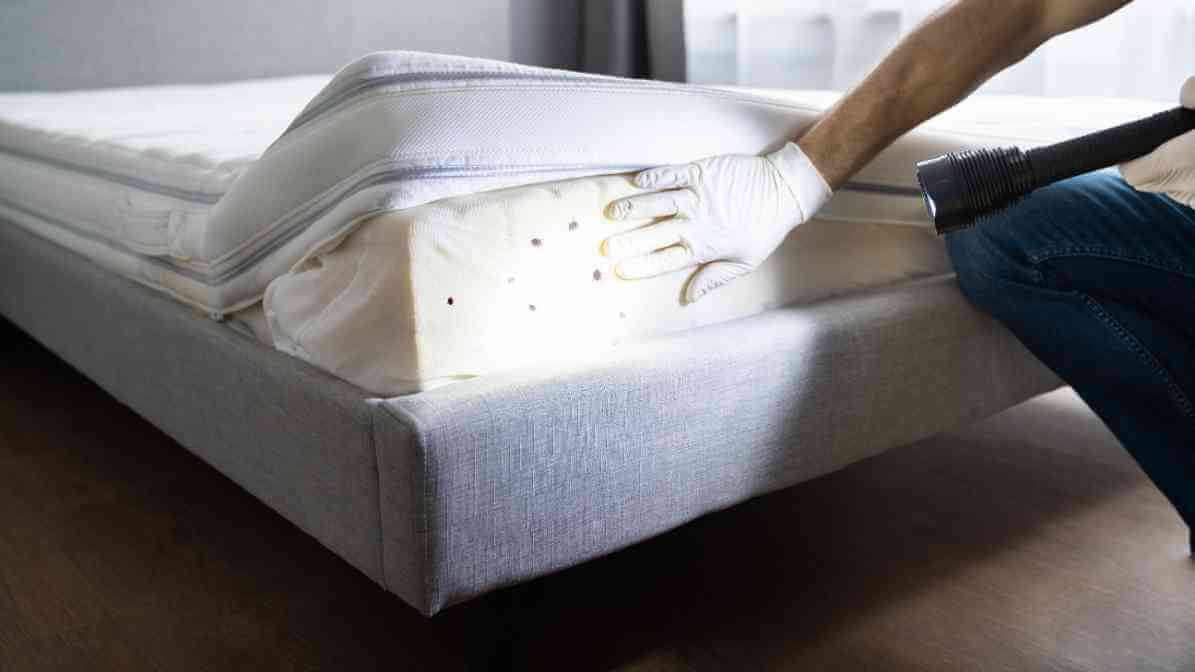
Bedbug poop (also called droppings or faecal spots) is one of the most reliable early signs of an infestation — often visible before you see a single live insect. Bedbug droppings consist of digested blood and have a very distinctive appearance:
Colour
Dark brown to black when dry. Fresh bedbug poop may have a rust-red or brownish hue that darkens as it dries. Unlike dirt or debris, bedbug faecal spots cannot be brushed away cleanly — they smear when rubbed with a damp cloth, leaving an orangey-brown stain.
Size & Texture
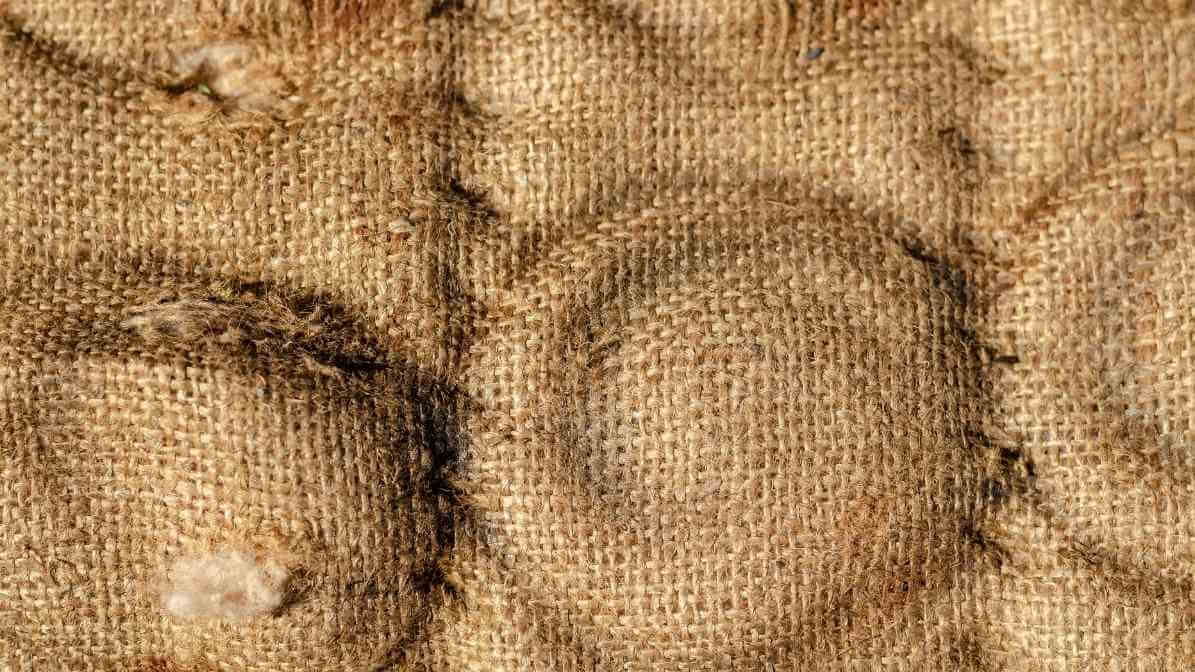
Typically 1–2mm in diameter — similar to the size of a felt-tip pen mark. They appear as small raised dots or can merge into ink-like staining on fabric. On hard surfaces (wood, plastic), they appear as distinct dots. On soft fabric, they soak in and appear as smudge-like spots.
Clusters
Bedbug poop is never found in isolation. Where you find droppings, you find multiple deposits — often in clusters or streaks near the bed bug's resting or feeding location. Dense clusters of bedbug droppings indicate a heavy infestation point immediately nearby.
Also Look For:
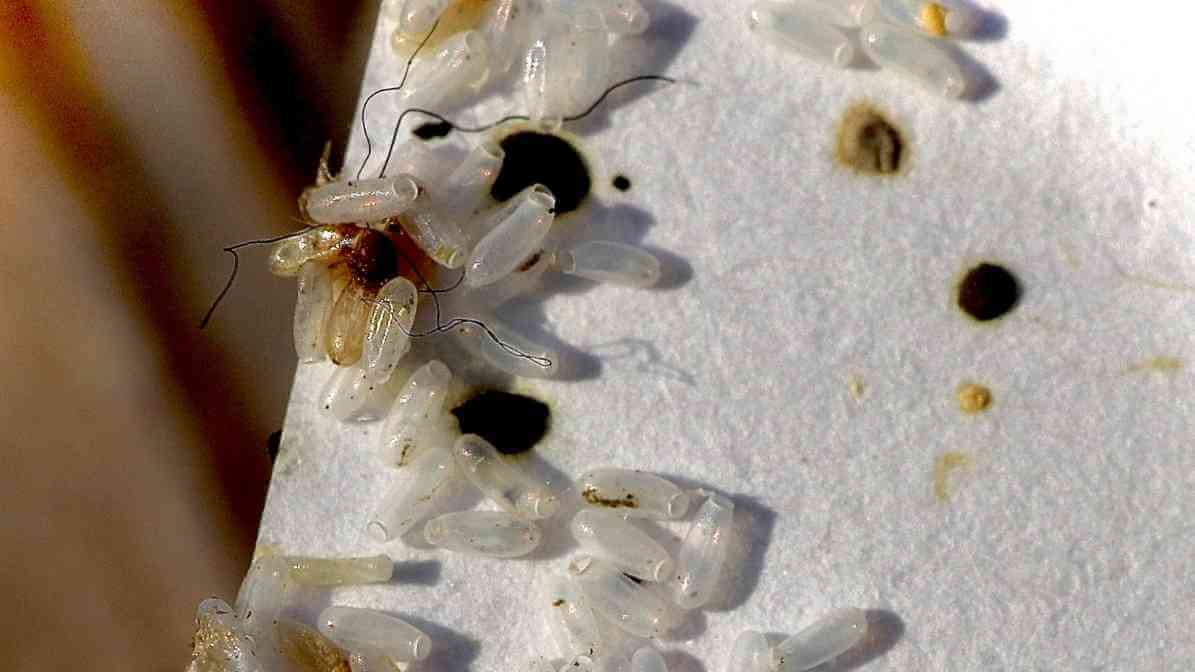
Shed skins (translucent moult casings) | Tiny white eggs or egg casings | Live or dead bed bugs (flat, oval, apple-seed shaped) | Blood stains from crushed bed bugs on sheets
Apple Seed Size
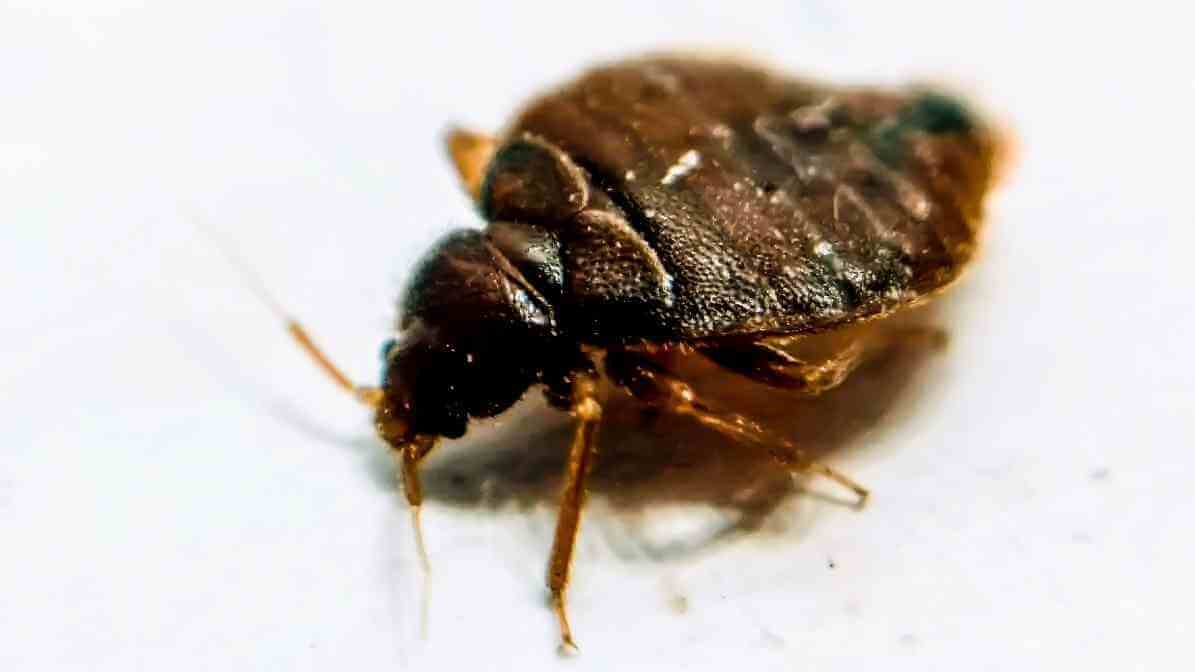
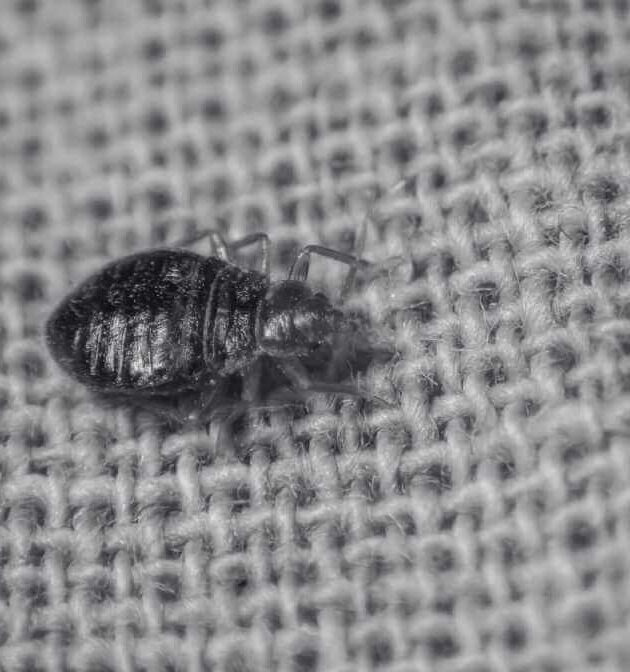
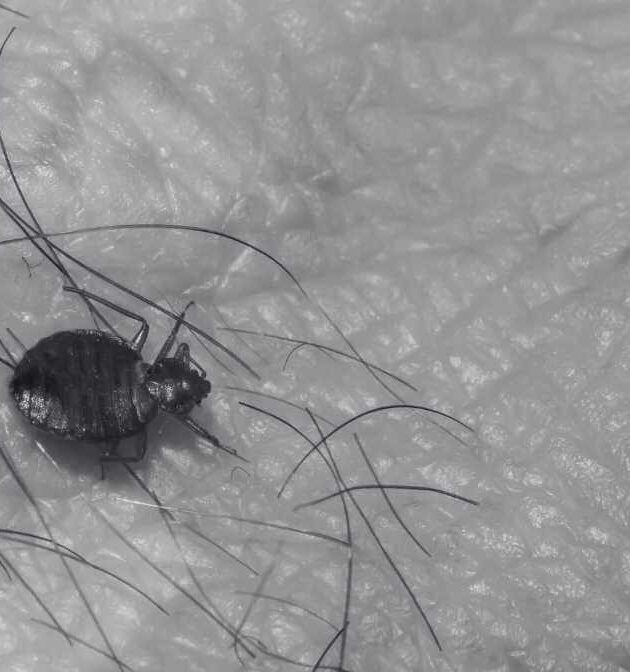
Adult bed bugs are roughly 4–5mm — the size of an apple seed. Flat, oval and reddish-brown. After feeding, they become swollen and darker.
Shed Skins & Powder
Nymphs moult 5 times. Translucent shed skins and powdery debris in mattress seams indicate ongoing nymph activity.
Blood Stains
Rust-coloured stains on sheets from inadvertently crushed bed bugs during sleep. Often the very first sign noticed.
Section 02
Where Do Bed Bugs Hide? 5 Key Locations
Bed bugs are expert concealers. During daylight hours, they retreat to tight, dark harbourage sites within 3–5 metres of where their host sleeps. Finding bedbug poop clusters near these locations confirms active harbouring:
Location 1
Bed Frame & Mattress
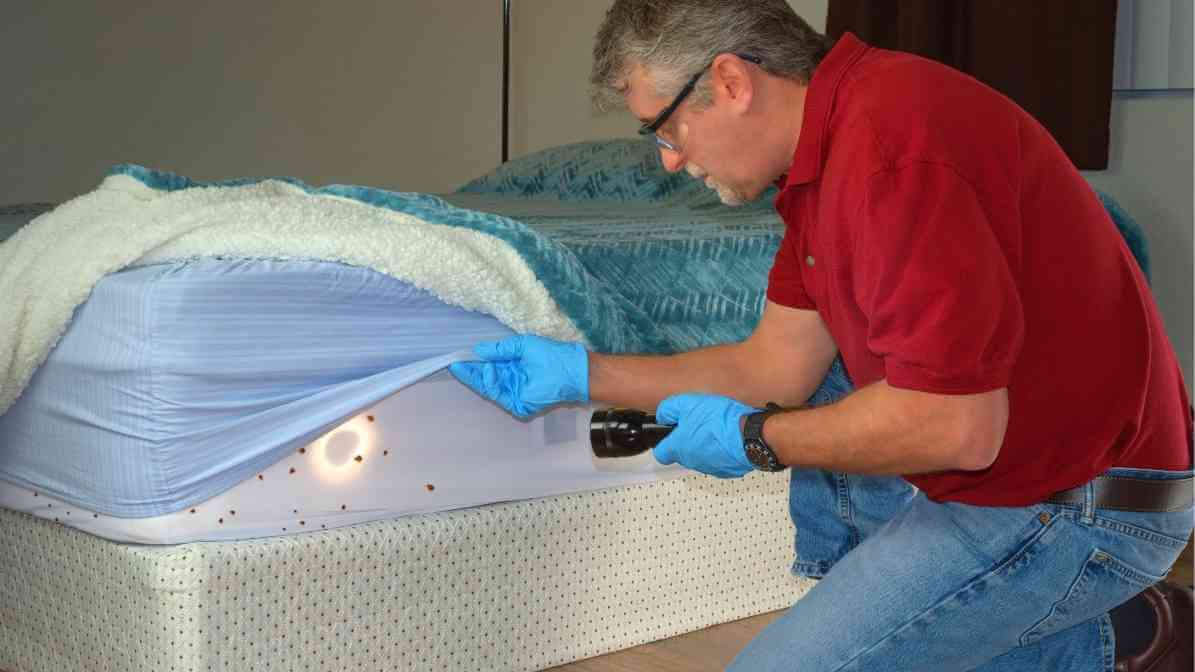
Inspect seams, folds, piping and tufts of mattress. Check every joint and hollow in the bed frame. Look for bedbug poop clusters, shed skins and live bugs in all crevices — these are the primary zone.
Location 2
Mattress & Box Spring Underside
The underside corners and edges of the box spring are prime harbouring sites. Bedbug droppings found here indicate heavy infestation. Encasements can trap existing bugs but do not eliminate those already in the frame.
Location 3
Wall Cracks & Baseboards
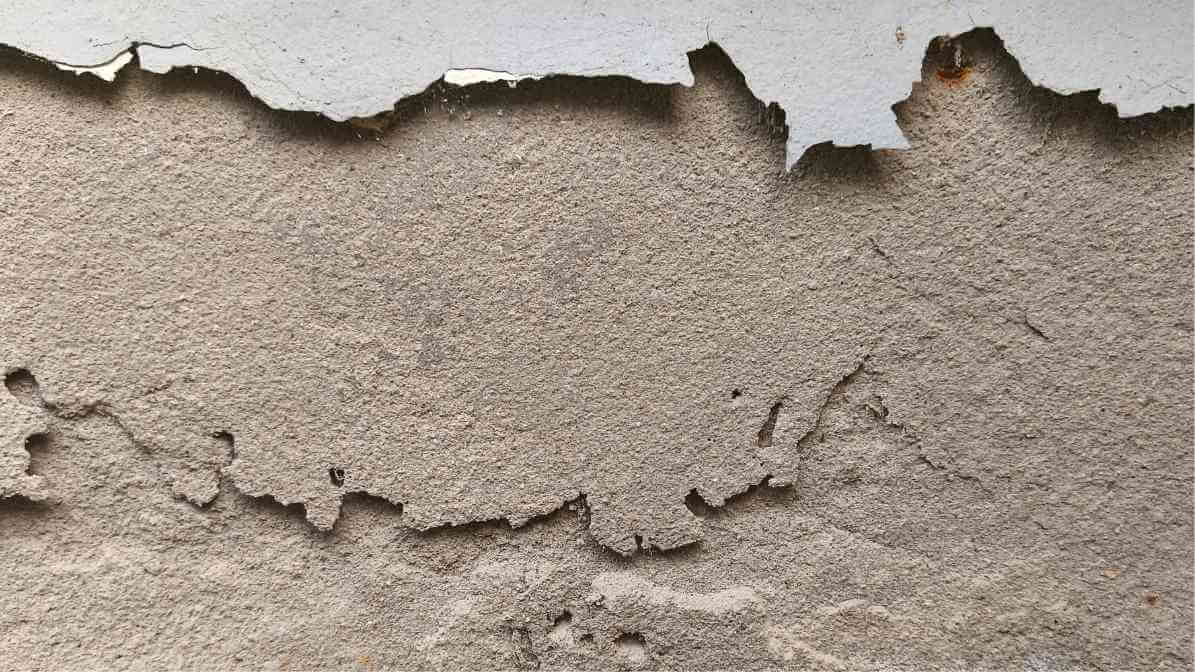
As infestations grow, bed bugs spread to wall cracks, baseboards, behind picture frames and inside wall voids. Bedbug poop along skirting boards indicates a well-established, spreading population.
Location 4
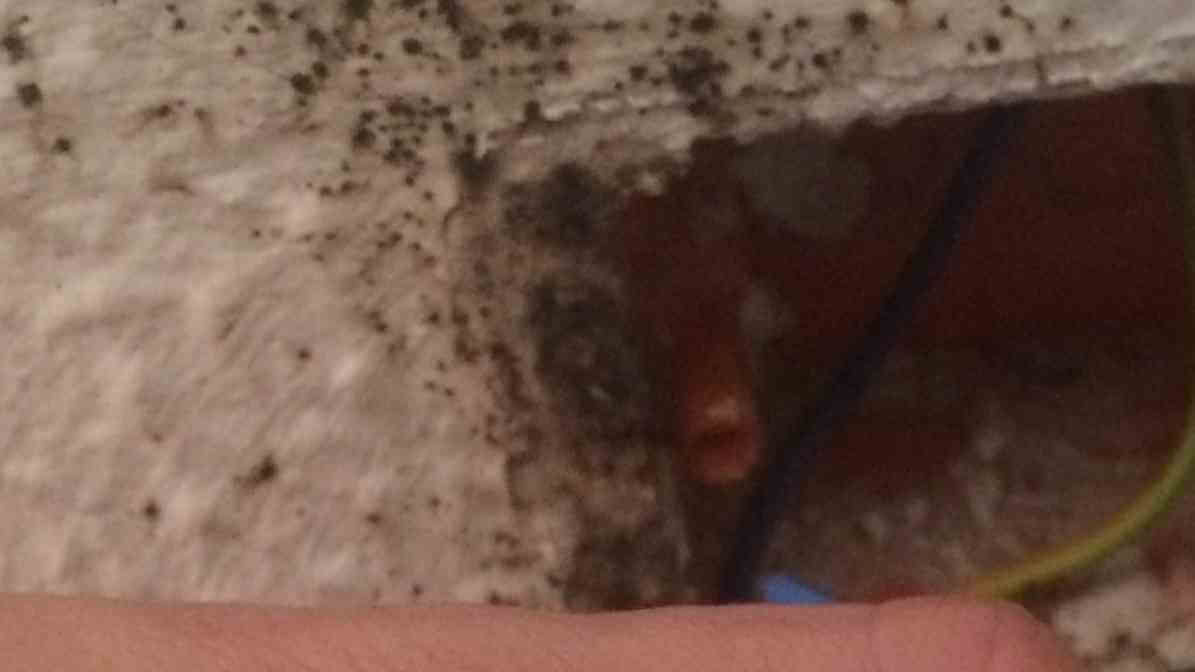
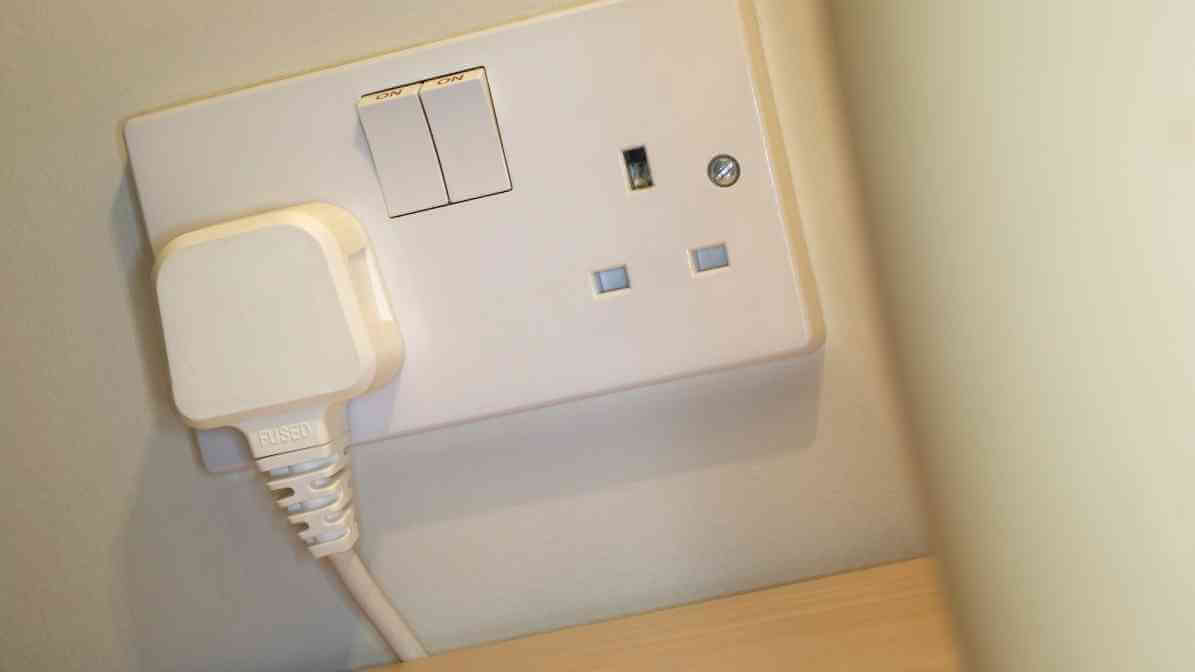
Electrical Outlets
A frequently overlooked harbourage site. Bed bugs access wall interiors through electrical outlets — enabling movement between rooms in multi-unit buildings. Bedbug poop around outlet edges is a key indicator.
Location 5
Upholstered Furniture
Sofas, chairs and ottomans with fabric surfaces provide ideal harbouring — especially in rooms where occupants sleep. Check under cushions, in seams and beneath the furniture base. Drapes and curtain hems are secondary sites.
Section 03
Bed Bug Bites: Identification & Health Impact
Bed bug bites do not transmit disease but cause significant physical and psychological distress. Identifying bites correctly helps distinguish them from other insects:
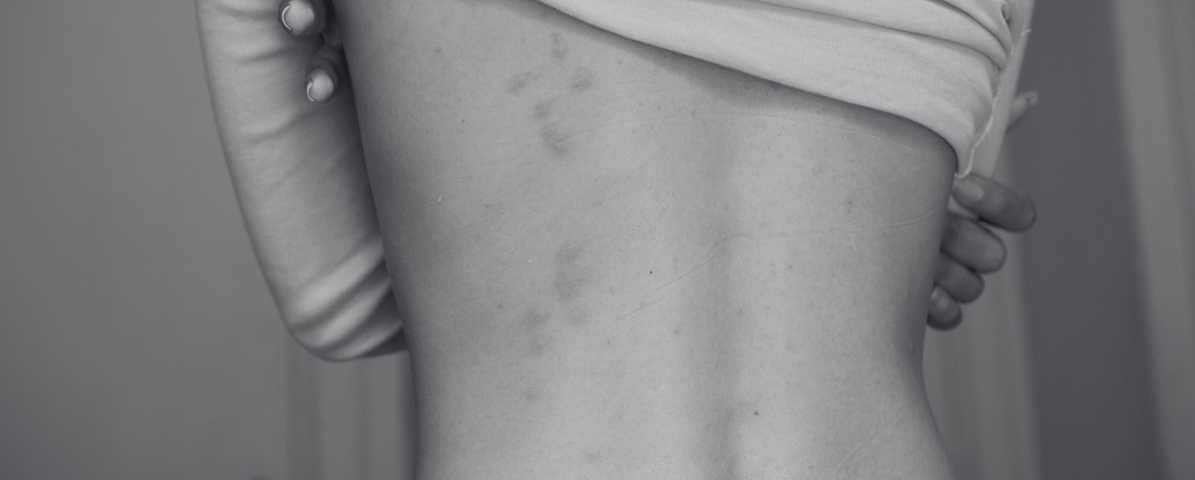
Bed Bug Bites
●Red, raised bumps in zigzag or linear pattern
●On exposed upper body: neck, arms, shoulders
●Intense itching, possible swelling
●Reaction may be delayed 1–3 days
Flea Bites (for comparison)
●Random cluster pattern, not linear
●Concentrate on ankles and lower legs
●Immediate itch with central red dot
●Often present when pets are involved
When to See a DoctorWhile bed bug bites are not medically dangerous for most people, some individuals develop severe allergic reactions including blistering, widespread hives or secondary skin infections from scratching. Repeated exposure over weeks can cause anxiety, sleep deprivation and significant psychological distress. Seek medical attention if bites show signs of infection (increasing redness, warmth, pus) or if severe allergic symptoms develop.
Professional Bedbug Control Singapore
Found bedbug poop on your mattress?
Once you find bedbug droppings, live insects are hiding nearby. Early treatment is significantly more effective and less costly than waiting for the infestation to spread. Innovative Pest Management uses heat treatment at 50°C that kills all life stages — including eggs in seams that chemical sprays cannot penetrate. NEA-licensed. Available 7 days a week.
Heat Treatment (Primary Recommendation)Raising the temperature in the infested area to above 50°C kills all bed bug life stages including eggs, in 30 minutes. Heat penetrates mattresses, seams, furniture and wall voids — eliminating insects in harbourage locations that chemical sprays cannot reach. Chemical-free, eco-friendly and highly effective for Singapore's high-density housing.
2
Steam TreatmentSteam at 120°C+ penetrates mattress seams, bed frame crevices and furniture fabric. Kills all life stages on contact without chemical residue. Effective for targeted treatment of confirmed harbourage sites alongside heat or chemical programmes.
3
Targeted Chemical TreatmentEco-approved residual insecticides applied to cracks, crevices, baseboards and bed frame components where bedbug poop clusters are found. Multiple treatments 2–3 weeks apart are required to address nymphs that hatch from surviving eggs after the initial application.
4
Cryonite (Cold Treatment)Freezing infested items with liquid CO2 at −78°C destroys bed bugs on contact. Effective for sensitive electronics, equipment and areas where heat cannot be safely deployed. Leaves no residue and is safe around food.
5
Mattress & Box Spring EncasementsSpecialist encasements trap existing bed bugs in the mattress, starving them over 12–18 months while preventing reinfestation of a treated mattress. Used as part of a comprehensive treatment programme rather than as a standalone solution.
Section 05
Frequently Asked Questions
Yes — bedbug poop (faecal spots) on a mattress is a definitive sign of infestation even if you have not yet seen a live insect. Bed bugs are nocturnal and extremely adept at hiding during daylight hours. Finding droppings means they are actively feeding on you at night. The absence of visible live bugs is simply a result of their concealment behaviour — they will be harbouring in the mattress seams, bed frame joints or nearby wall cracks. The number of droppings gives an approximate sense of infestation severity: a few isolated spots may indicate an early infestation; dense clusters or widespread spotting across multiple areas suggests a heavy, established population. In either case, professional inspection and treatment should be arranged as soon as possible. Infestations are significantly harder and more expensive to treat as they spread to more locations over time.
Consumer insecticide sprays rarely achieve complete eradication of bed bug infestations. The main reasons: over-the-counter sprays have low residual activity and do not penetrate the harbourage sites where bed bugs spend most of their time; eggs are resistant to many common insecticides and will hatch 6–10 days after treatment creating a second generation; and incomplete treatment causes surviving insects to scatter to new areas, making the infestation harder to locate and treat in subsequent attempts. For confirmed infestations — particularly those involving bedbug poop across multiple locations or multiple rooms — professional heat treatment or a structured chemical programme is significantly more likely to achieve full eradication. DIY approaches may be appropriate for very early infestations (single location, few insects) combined with rigorous hot washing of all bedding and encasement of the mattress.
In most cases, no — mattress disposal is not necessary and can actually make the infestation worse if the mattress is moved through the home during removal. Heat treatment effectively kills all bed bugs and eggs within the mattress without requiring disposal. Steam treatment can target mattress seams directly. A specialist encasement installed after treatment traps any survivors and prevents reinfestation of the mattress surface. Mattress disposal should only be considered if the mattress is severely damaged with large volumes of bedbug poop staining, shed skins and eggs to the extent that it cannot be safely treated — and even then, the mattress should be sealed in plastic wrap before removal to prevent bug dispersal during transport.
Written by
Leia Rassid
Content Specialist • Innovative Pest Management
Pest control content specialist at Innovative Pest Management. Leia writes practical identification and prevention guides to help Singapore homeowners and businesses stay pest-free.
Bedbug droppings are the first reliable sign of infestation. Early treatment is dramatically more effective and affordable than treating a spread infestation across multiple rooms. Innovative Pest Management uses heat treatment at 50°C that kills all life stages — including eggs hidden in mattress seams that chemical sprays cannot reach. NEA-licensed specialists available 7 days a week across Singapore.
I am committed to turning complex pest-management insights into clear, practical information that anyone can understand. Through my work, I aim to empower homeowners and businesses to make informed decisions that protect their health, property and environment.