

Proven Natural Home Remedies for Fleas and Ticks Infestations
November 5, 2025
The Ultimate Guide for Hornet Sting, Quick, Powerful Treatment
November 8, 2025
In Singapore's tropical climate, hornets build nests year-round — and rooftops are their preferred territory. What starts as a small paper-comb the size of a tennis ball in spring can become a colony of 700 or more workers by mid-year. By the time most homeowners notice activity, the nest is already dangerous. This guide covers everything you need to know: species identification, the real risks, warning signs, and how professional removal works.
- ✓Hornets nesting on roofs or in roof voids can remain undetected for weeks — by which point the colony is large enough to mount a mass attack.
- ✓DIY removal using sprays or smoke is dangerous — it triggers immediate aggressive swarming without destroying the colony.
- ✓Professional removal for high-level nests requires scaffolding, full protective equipment, and targeted treatment — not just a can of spray.
- ✓Early detection and routine roof inspections are the most effective way to prevent a small nest from becoming a large-scale hazard.
Hornet Species Found in Singapore
Hornets belong to the genus Vespa and are the largest members of the wasp family. They're often misidentified as large wasps or bees — but the distinction matters, as different species have different nesting habits, aggression thresholds and venom potency. Knowing what you're dealing with helps you respond correctly and report accurately to professionals.
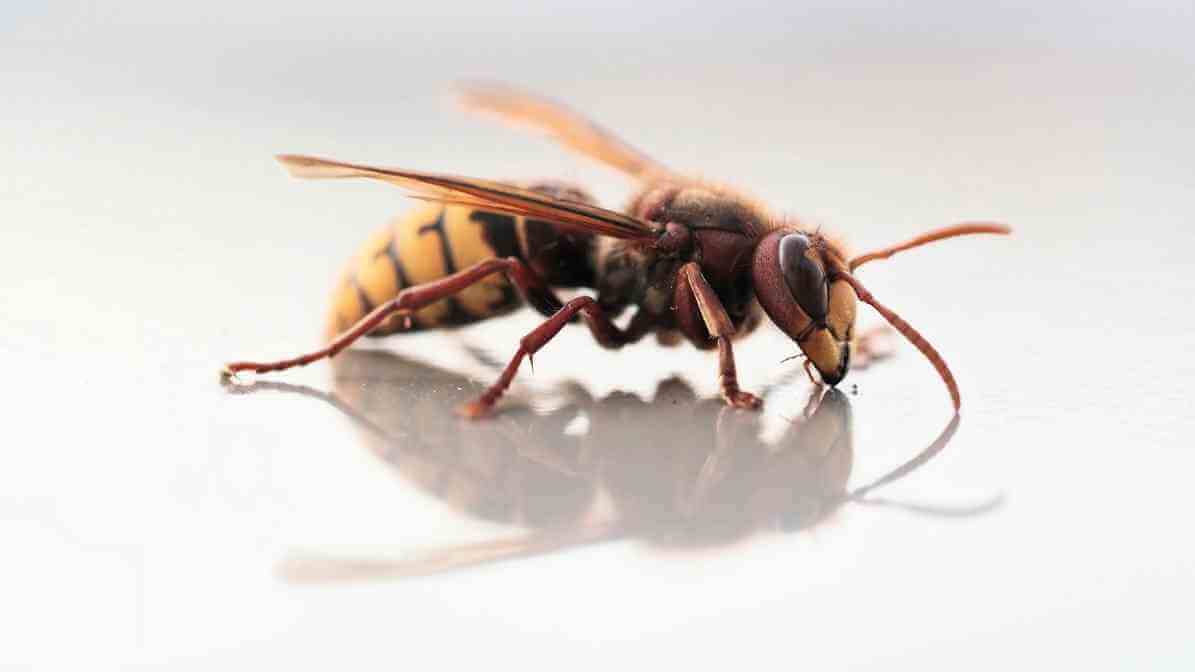
The world's largest hornet, known internationally as the "murder hornet." Rare but documented in Singapore via cargo. Can reach 5cm in length and delivers an exceptionally painful sting. A single individual can kill dozens of honeybees per minute, decimating nearby hives. Known to build large underground or aerial colonies.
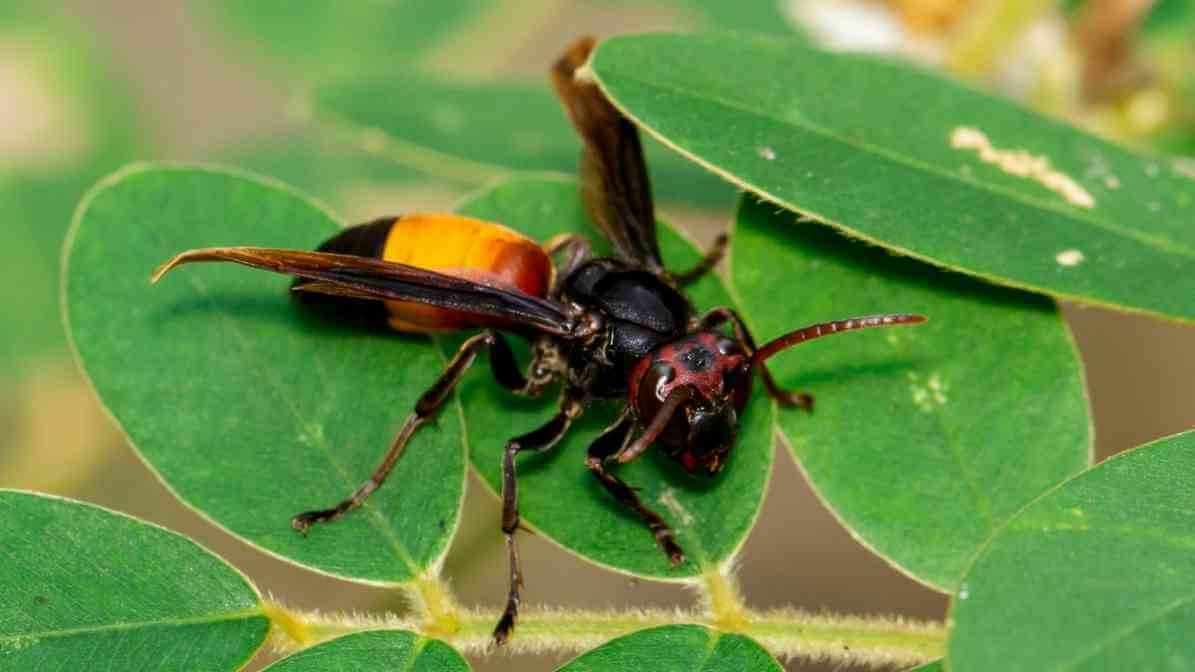
Singapore's most commonly encountered hornet species. Identified by its distinctive jet-black body with a broad orange-yellow band. Highly territorial and reactive to vibration, heat or sudden movement near the nest. The species responsible for the fatal attack on Ronnie Ang in Sembawang in 2022. Builds medium-to-large nests in trees, roof eaves and ceiling voids.
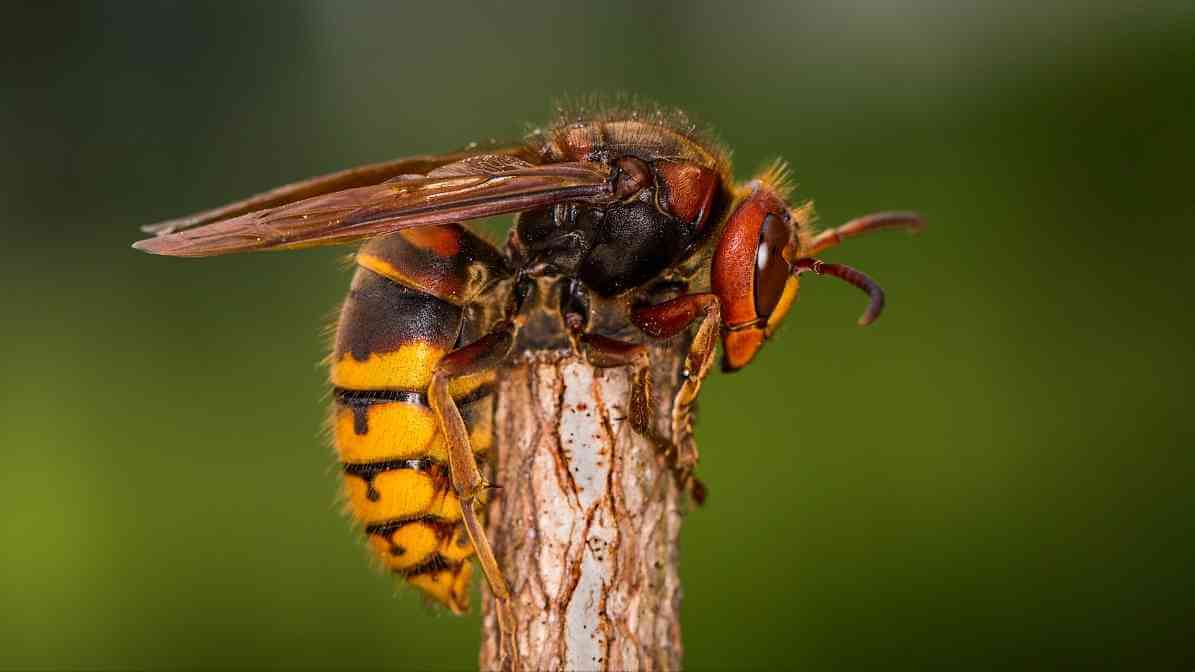
Less common in Southeast Asia, but occasionally introduced into Singapore through international cargo and plant shipments. Europe's only true hornet, identifiable by its brown and yellow colouring. Notable for a loud, low-frequency buzz in flight. While generally less aggressive than Vespa affinis, established colonies will defend their nests forcefully.
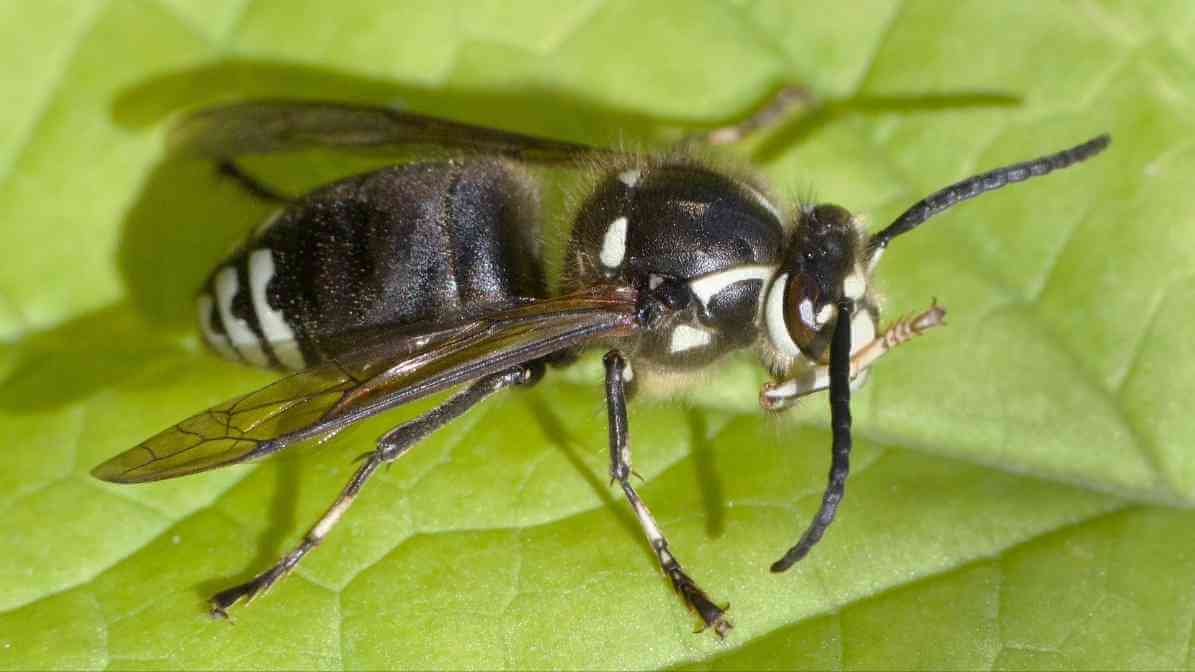
Technically classified as a yellowjacket, but widely grouped with hornets due to its size, aggressive colony defence and distinctive paper-nest construction. Identified by its white facial markings on a black body. Builds exposed, teardrop-shaped aerial nests in trees, under eaves or on building facades. Notoriously aggressive when the nest is approached.
How Hornets Build Nests — and Why Roofs Are at Risk
Hornets are expert architects. A colony begins in early season when a newly mated queen selects a sheltered site and constructs the first few cells from chewed wood pulp mixed with saliva — forming the characteristic grey, papery comb structure. Over 8 to 12 weeks, this initial structure expands floor by floor into a multi-tiered fortress housing hundreds of workers.
Singapore's combination of warm temperatures year-round, abundant hardwood trees and moisture-rich air provides ideal conditions for rapid nest construction. Rooftops are particularly attractive because they offer:
Protected from rain and wind, with constant structural wood fibre for nest material. Common in Singapore's landed homes and terrace houses.
Dark, undisturbed interior spaces allow colonies to grow undetected for months. Often not noticed until buzzing becomes loud or workers enter living areas.
Warm, enclosed channels that attract hornets seeking shelter. Common in commercial buildings, HDB blocks and industrial properties.
Nests built high in tree canopies close to rooflines create a direct flight path that brings hornets regularly past windows, balconies and occupied areas.
4 Serious Dangers of a Hornets Nest on Your Roof
Hornets are not inherently aggressive. They become extremely dangerous only when they feel their colony is threatened — but in an urban environment, the threshold for that trigger is low. Here's what's at stake when a nest is left unaddressed:
Hornet venom contains acetylcholine and histamine at concentrations higher than most stinging insects. A single sting causes intense burning pain, spreading swelling and in sensitive individuals, anaphylactic shock within minutes. Unlike bees, hornets sting repeatedly, and when defending a nest, multiple workers attack simultaneously — making mass envenomation a real risk for anyone who unknowingly approaches.
Hornets are apex predators among insects. A single Asian giant hornet can kill 40 or more honeybees per minute; a small scouting party can annihilate an entire hive colony in under an hour. For Singapore's urban green spaces and gardens, hornets established near flowering trees represent a genuine threat to local pollinator populations and the ecological health of the surrounding environment.
A mature nest embedded in a ceiling void or attic space retains moisture and generates heat from colony activity. Over time, this can cause wood rot in structural beams, staining of ceiling boards, blockage of ventilation passages and accelerated corrosion of roof fixings. The larger the nest, the greater the structural impact — and the more costly the remediation once removed.
In densely populated Singapore, a hornet attack on a shared roof or communal area can affect neighbours, delivery workers, children and passers-by — not just the building's occupants. Property owners who are aware of a nest and fail to act may carry liability if a sting incident occurs. Commercial premises face additional regulatory obligations under NEA guidelines to maintain pest-free environments.
Warning Signs You Have a Hornets Nest on Your Roof
Many Singapore homeowners don't realise they have a nest until the colony is already large. The key is recognising early warning signs and responding without disturbing the area — hornets interpret vibration and noise as a threat. If you observe any of the following, do not investigate further. Call a professional.
Seeing multiple hornets repeatedly returning to the same point on your roof, eave or overhang is the most reliable early indicator of an active nest. Workers follow consistent flight paths between the nest and food sources.
A persistent low-frequency buzzing within ceiling boards or roof voids — especially noticeable in quiet conditions or at night — indicates colony activity inside the structure. By this stage the colony is already well-established.
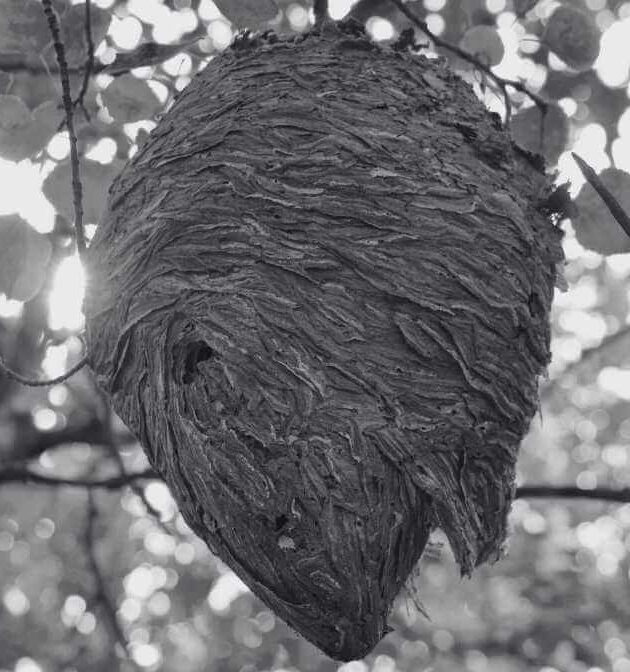
Hornets build layered, papery grey structures that resemble layered onion skins. If you can see this material from ground level near a corner, rafter or overhanging structure, the nest is already large enough to be dangerous.
Small accumulations of grey fibrous material beneath eaves, gutters or window ledges indicate that hornets are actively chewing wood nearby to build nest material. An early-stage warning sign worth acting on immediately.
Unlike most insects, hornets are active at dusk and will hunt near bright outdoor lights. If you notice hornets gathering at night around your exterior lights or windows, a nest is likely within close proximity of the building.
Important: If you spot any of these signs, do not tap walls, throw objects at the nest or attempt to spray it. Hornets detect vibration as an attack signal. Keep residents and visitors away from the area and contact a licensed pest management specialist immediately.
Why You Should Never Attempt DIY Hornet Nest Removal
Every year in Singapore, residents are admitted to A&E departments after attempting to deal with hornet nests themselves. The impulse is understandable — a can of insecticide feels like the obvious solution. In practice, DIY nest removal on a live colony is one of the most dangerous actions a homeowner can take.
Our NEA-licensed team handles nest removal at any height — including roof-level access with certified scaffolding, full PPE and targeted treatment. Same-day service available.
Our 5-Step Professional Removal Process
Professional hornet removal is not simply spraying a nest from a distance. Every job — particularly those involving roof-level access — follows a structured process designed to eliminate the colony completely while protecting technicians, residents and the surrounding environment.
A licensed specialist conducts a thorough inspection to identify the species, assess colony size and activity level, and determine access difficulty. For hard-to-reach nests, inspection cameras and drone surveys are used to locate hidden or secondary nests in ceiling voids, gutters or tree canopies. This stage prevents unexpected complications during removal.
For nests on multi-storey buildings, warehouse roofs or complex roof structures, we deploy certified scaffolding compliant with Singapore's Workplace Safety and Health regulations. Each scaffold includes secured platforms, guard rails and anti-slip decking, providing a stable working zone. The area below is sealed with warning barriers and signage to protect passersby and building occupants. This is the step that separates professional removal from dangerous improvisation.
Technicians suit up in full-body protective suits, reinforced gloves, face shields and respirators before any nest contact. The surrounding zone is secured with caution tape and barriers. Residents and workers are advised to remain indoors until the procedure is complete. This perimeter control prevents bystander exposure during the neutralisation phase.
Professional-grade insecticides are applied directly into the nest entrance and throughout the colony structure, reaching combs and brood chambers inaccessible to retail sprays. The treatment kills the colony, including the queen, larvae and all workers. Once confirmed neutralised, the entire physical nest structure is removed, sealed and disposed of safely — preventing any remaining hornets from rebuilding at the site.
Every client receives tailored advice on preventing re-infestation: sealing entry points in roof structures, recommended inspection schedules, vegetation management and early-warning monitoring. Singapore's tropical climate allows hornets to begin new colonies year-round, so post-removal prevention is not optional — it's an essential part of the service.
Frequently Asked Questions

Pest control content specialist at Innovative Pest Management. Leia writes practical identification and prevention guides to help Singapore homeowners and businesses stay pest-free.
View all articles

Don't Wait for the Colony
to Reach 700 Workers.
A hornet nest doubles in size every few weeks. Early removal is safer, faster and significantly less costly than emergency intervention on a fully established colony. Our team is ready 24/7 — with certified scaffolding for any roof height.