Home›Pest Blog›Fascinating Life of Honey Bee in Singapore
Bees SingaporeEcology & Conservation
Fascinating Life of Honey Bee in Singapore
Honey bees are among the most ecologically vital insects in Singapore — pollinating the native flora that sustains urban biodiversity, supporting agriculture and producing honey in remarkably organised colonies. This guide explores the honey bee colony structure, their complete life cycle, the roles of queen, worker and drone bees, their irreplaceable pollination function in Singapore and the conservation measures that protect them.
Innovative Pest Management
|Updated September 2025|9 min read|NEA Licensed
16–24
Days from egg to adult honey bee
3
Castes in every honey bee colony: queen, worker, drone
1/3
Of global food supply depends on bee pollination
NEA
Licensed bee hive removal specialists Singapore
In Singapore's tropical landscape, bees play a vital and often underappreciated role in sustaining the city's biodiversity. The honey bee species most common in Singapore — Apis cerana (the Asian honey bee) and Apis mellifera (the Western honey bee) — form highly organised colonies with sophisticated communication systems, division of labour and a biological elegance that has evolved over millions of years. Understanding their remarkable life is essential both for appreciating their ecological importance and for knowing how to respond appropriately when a hive establishes itself on your property.
Key Takeaways
✓The honey bee colony is a superorganism with three castes: the queen (sole reproductive), worker bees (all female, perform all colony tasks) and drones (male, sole purpose is mating).
✓The complete bee life cycle (egg to adult) takes 16–24 days depending on caste — queens develop fastest (16 days), workers in 21 days and drones in 24 days.
✓Bees in Singapore are vital pollinators of urban parks, botanical gardens and native flora — their activity directly supports biodiversity and local food production.
✓If a bee hive establishes itself on your property, never attempt self-removal — professional relocation preserves the colony while safely removing the hazard.
Section 01
The Honey Bee Colony: A Superorganism
The honey bee colony functions as a single superorganism — tens of thousands of individual bees operating with unified purpose. Each colony contains three distinct castes, each with a specific biological role:
Queen Bee
The sole reproductive female. Lays up to 2,000 eggs per day and can live 3–5 years. She maintains colony cohesion through pheromone signals and is fed exclusively on royal jelly throughout her life.
Worker Bees (Female)
Comprising 95%+ of the colony. Workers perform all colony tasks: foraging nectar and pollen, feeding larvae, building comb, regulating hive temperature and defending against predators. They live 6–7 weeks in summer, longer in winter.
Drones (Male)
The male bees. Their sole purpose is mating with a new queen during mating flights. Drones do not forage, build comb or sting. After mating season, they are expelled from the hive by workers.
Section 02
The Honey Bee Life Cycle: Egg to Adult
The entire bee life cycle from egg to adult takes 16 to 24 days, varying by caste. In Singapore's warm, humid climate, development proceeds rapidly — a key reason bee populations can establish large colonies quickly when conditions are favourable.
1
Egg Stage (Day 1–3)
The queen lays a single egg in each wax cell. Fertilised eggs develop into female workers or future queens; unfertilised eggs become drones. Within 3 days, each egg hatches into a larva.
2
Larval Stage (Day 3–9)
Worker bees feed larvae with royal jelly initially, then with a mixture of nectar and pollen (known as bee bread). Larvae fed exclusively royal jelly develop into queens. During this stage, larvae grow rapidly and undergo several moults.
3
Pupal Stage (Day 9–21)
Workers cap each cell with wax. Inside, the larva metamorphoses into its adult form, developing wings, legs, compound eyes and the specialised body structures of its caste over 10–15 days.
4
Adult Stage
The fully formed adult chews through the wax cap and emerges. Queens emerge at day 16, workers at day 21, drones at day 24. Worker bees immediately begin performing age-appropriate tasks within the colony.
Section 03
How Worker Bees Support the Hive
Worker bees are the backbone of the bee colony. Their roles change as they age — younger workers perform tasks inside the hive while older foragers venture outside:
Foraging (Days 14–42)
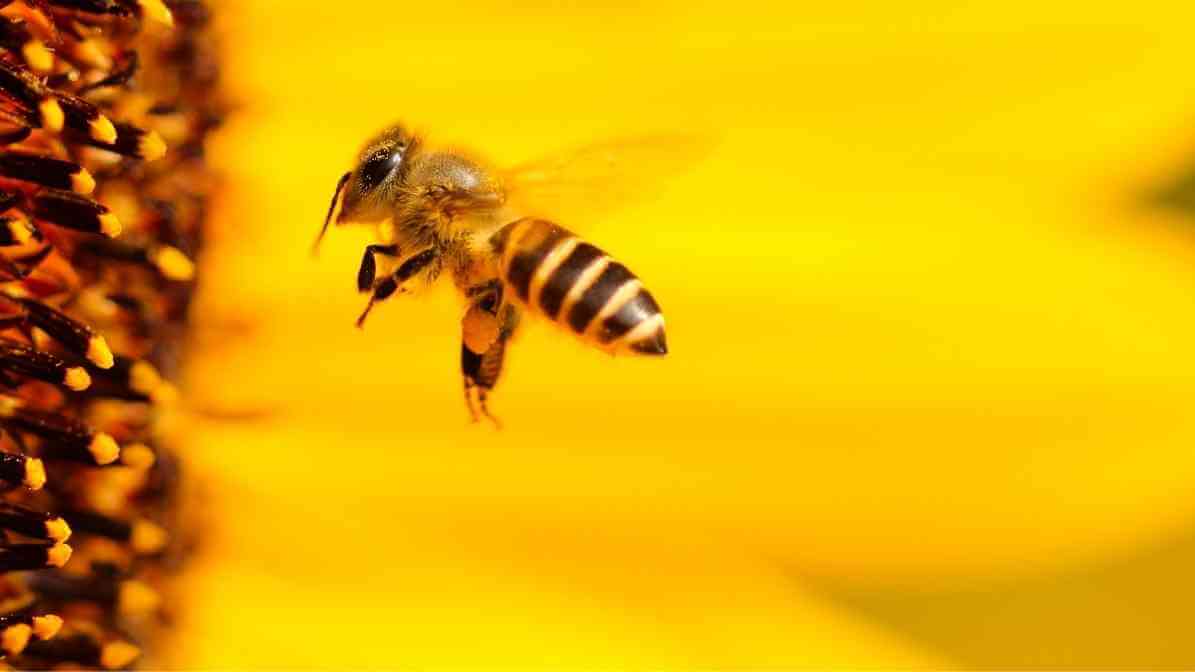
Experienced foragers venture up to 5km from the hive to collect nectar, pollen and water. They communicate flower locations to hive-mates through the "waggle dance" — a figure-eight movement that encodes both direction and distance.
Nursing Larvae (Days 1–12)
Young worker bees produce royal jelly from head glands and feed all larvae, including the queen. They inspect and clean each cell, adjusting larval care based on colony needs. Larvae destined to be queens receive royal jelly exclusively.
Comb Building & Cleaning
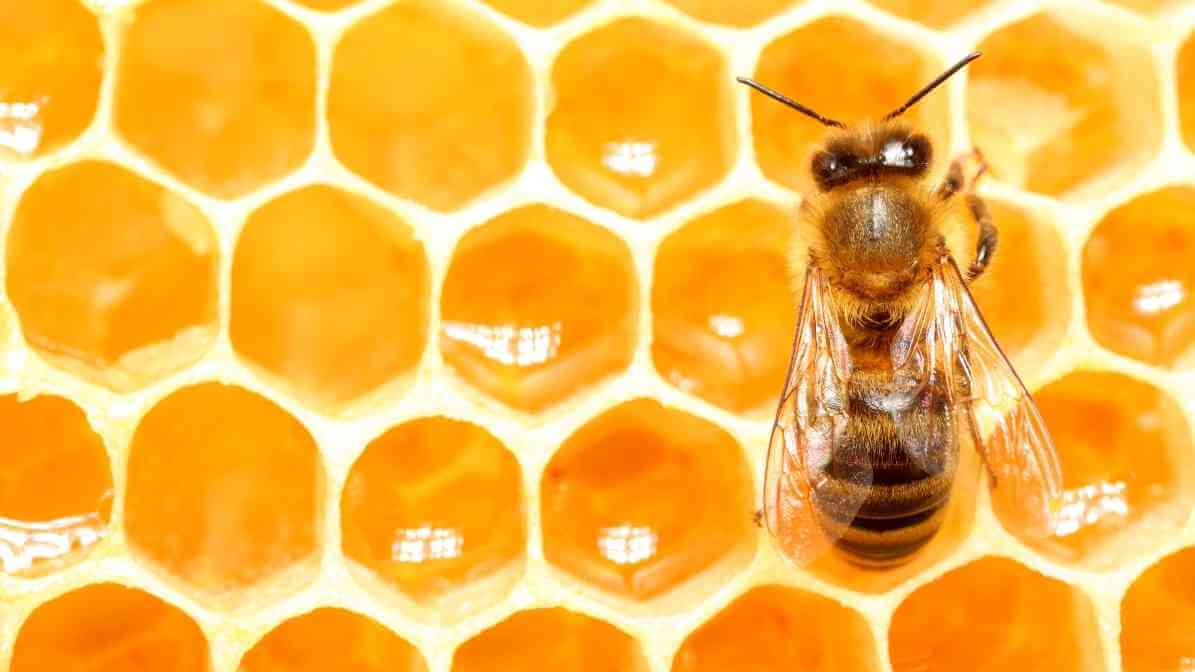
Workers produce beeswax from glands on their abdomen to construct and repair the hexagonal cells of the honeycomb. They also maintain hive hygiene — removing dead bees, propolis-sealing cracks and evicting parasites or intruders.
Temperature Regulation
Worker bees maintain hive temperature at a precise 35°C for brood development. They fan their wings collectively to cool the hive and cluster together in cooler conditions to generate warmth. This thermoregulation is critical for healthy larval development.
Section 04
Pollination: Why Bees in Singapore Are Irreplaceable
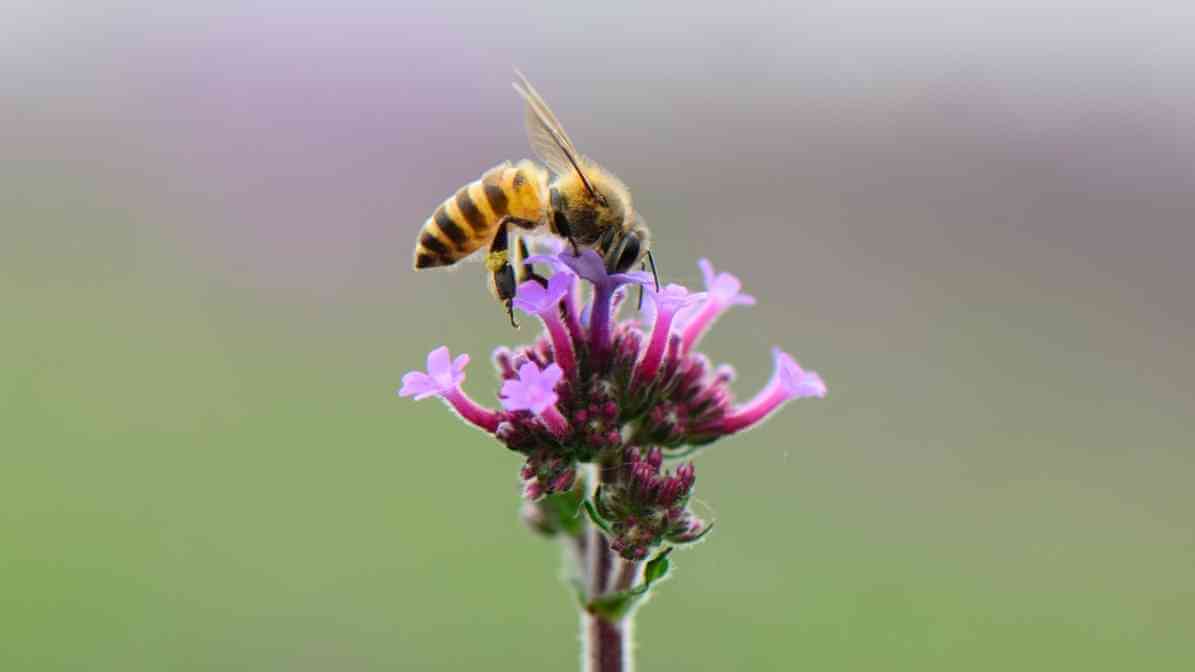
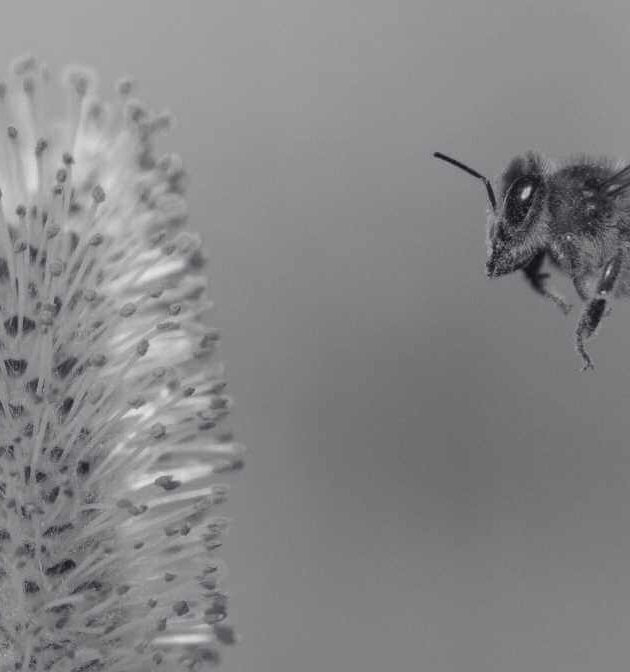
Bees in Singapore are vital pollinators of the city's extensive urban green spaces. As foraging worker bees move from flower to flower collecting nectar, pollen adheres to their bodies and is transferred to new flowers — enabling fertilisation, fruit production and seed development across hundreds of plant species.
In Singapore's context, bee pollination supports the native flora of parks, botanical gardens and nature reserves including the Singapore Botanic Gardens — a UNESCO World Heritage Site. Without their pollination services, many plant species would fail to reproduce and the food web that depends on them would be disrupted.
Threats to Bee Populations
●Urban development reducing natural nesting habitats in dead wood and vegetation
●Pesticide use in agriculture and urban pest control that disrupts foraging behaviour
●Parasites such as Varroa mites that weaken colonies and reduce productivity
●Climate variability affecting seasonal flowering patterns and food availability
Bee Hive Removal Singapore
Bee colony on your property?
Innovative Pest Management prioritises safe bee hive relocation over extermination. Our NEA-licensed specialists safely relocate colonies to appropriate environments where bees can continue to thrive — protecting your family and Singapore's bee population. Available 24/7 for urgent situations.
Honey bees are generally non-aggressive unless their colony is directly threatened. A foraging bee away from the hive will rarely sting unprovoked — stinging is a last resort because worker bees die after stinging. Colonies will become defensive if the hive is disturbed, vibrated, or if dark-coloured clothing and strong fragrances provoke a threat response. Apis cerana (the Asian honey bee common in Singapore) is considerably calmer than African bee variants. The primary risk comes from accidentally disturbing an established hive. If you discover a hive on your property, keep people and pets away and contact a professional removal service rather than attempting self-treatment.
Bees and wasps are frequently confused in Singapore but have key differences. Honey bees have rounded, fuzzy bodies covered in branched hairs that trap pollen — essential for their role as pollinators. Wasps have smooth, slender bodies with a distinctive narrow waist and are more brightly banded in black and yellow. Behaviorally, honey bees are generally docile and die after stinging; wasps can sting multiple times and are more likely to be aggressive when disturbed. Bees build wax combs; wasps build paper nests from chewed wood fibre. Both can establish colonies in and around buildings in Singapore and both should be handled by professional removal specialists rather than self-treated.
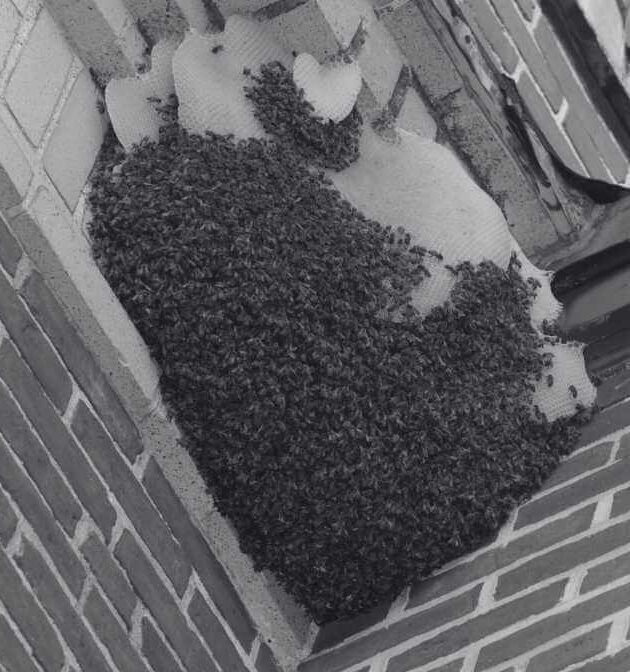
Swarming is the honey bee colony's natural reproductive process. When a colony becomes too large, the old queen leaves with approximately half the workers to find a new nesting site. The swarm typically clusters temporarily on a tree branch, wall or vehicle while scout bees search for a suitable new location. Despite their intimidating appearance, a swarm is actually at its most docile during this phase — the bees have no hive or brood to defend. However, if the swarm settles into a wall cavity, roof space or other structure on your property, it will quickly establish a permanent colony that becomes significantly harder and more hazardous to remove. If you observe a swarm, keep distance and call a professional immediately to either relocate it to an appropriate environment or guide it away from your property before it establishes.
Written by
Leia Rassid
Content Specialist • Innovative Pest Management
Pest control content specialist at Innovative Pest Management. Leia writes practical identification and prevention guides to help Singapore homeowners and businesses stay pest-free.
Bee Colony on Your Property? Safe Relocation, Not Extermination.
Honey bees are irreplaceable pollinators vital to Singapore's biodiversity. When a colony establishes itself on your property, Innovative Pest Management prioritises humane relocation to a suitable environment — protecting your family and the bees. Our NEA-licensed specialists are available 24/7 for urgent bee hive situations. Do not attempt self-removal as disturbing an established hive can trigger aggressive defensive behaviour.
I am committed to turning complex pest-management insights into clear, practical information that anyone can understand. Through my work, I aim to empower homeowners and businesses to make informed decisions that protect their health, property and environment.